
The Evolution of Cybersecurity: Will AI Replace Human Professionals?

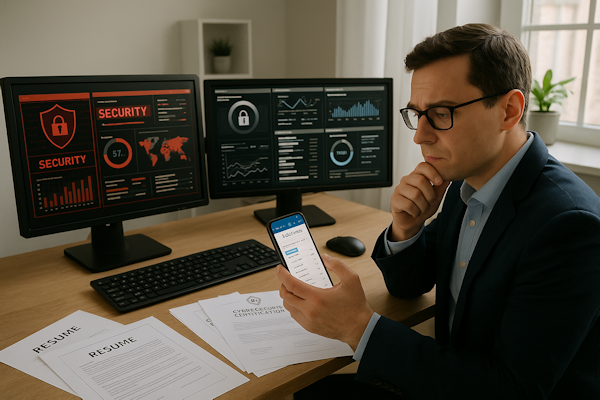
The Shifting Landscape of Cybersecurity in the AI Era
The cybersecurity domain is undergoing a profound transformation as artificial intelligence technologies mature and become more integrated into security operations. Organizations worldwide are increasingly deploying AI-powered solutions to defend against sophisticated cyber threats, automate routine security tasks, and enhance their overall security posture. This technological revolution has sparked intense debate about the future role of human cybersecurity professionals and whether AI might eventually replace them entirely.
As we navigate through 2025, the question becomes more pressing: Will AI systems eventually render human cybersecurity experts obsolete, or will the relationship between human expertise and artificial intelligence evolve into something more symbiotic? This article explores the current state of AI in cybersecurity, examines the changing roles of security professionals, and provides insights into the skills that will remain valuable in this rapidly evolving landscape.
Current Applications of AI in Cybersecurity
AI has already made significant inroads into cybersecurity operations, transforming how organizations detect, prevent, and respond to threats. Understanding these applications provides context for how the profession is evolving:
Enhanced Threat Detection and Response
AI systems excel at processing vast amounts of security data at unprecedented speeds, identifying patterns and anomalies that might indicate potential threats. Machine learning algorithms can analyze network traffic, user behavior, and system logs to detect suspicious activities that might escape human attention. These systems continuously learn from new data, improving their accuracy over time and adapting to emerging threat vectors.
Modern security operations centers (SOCs) increasingly rely on AI-powered tools to sift through millions of daily security events, prioritizing alerts based on risk levels and reducing the "alert fatigue" that has long plagued security teams. This capability allows security professionals to focus on investigating and responding to genuine threats rather than chasing false positives.
Automated Vulnerability Management
AI systems are revolutionizing vulnerability management by automating the discovery, prioritization, and even remediation of security weaknesses. These tools can continuously scan networks, applications, and systems for vulnerabilities, correlate findings with threat intelligence, and recommend mitigation strategies based on organizational risk profiles.
The automation of these previously manual processes has dramatically improved the efficiency of security teams, enabling them to address vulnerabilities more quickly and comprehensively than ever before. This shift represents a significant evolution in how organizations approach security risk management.
Behavioral Analytics and User Monitoring
AI-powered behavioral analytics tools establish baselines of normal user and entity behavior, then identify deviations that might indicate compromise or insider threats. These systems can detect subtle anomalies in user activities, access patterns, and data interactions that traditional rule-based approaches would miss.
By continuously monitoring user behavior across multiple dimensions, AI systems can identify potential security incidents early in the attack chain, before significant damage occurs. This capability has become increasingly important as organizations adopt remote work models and cloud-based services that expand the traditional security perimeter.
The Changing Role of Cybersecurity Professionals
As AI assumes more responsibilities in the security domain, the role of human professionals is evolving rather than disappearing. This transformation is creating both challenges and opportunities for those in the field:
From Rule Creation to Intent Validation
Traditionally, security professionals spent significant time creating and maintaining detection rules and security policies. As AI systems become more autonomous, the focus is shifting toward validating the intent and effectiveness of these automated systems. Security experts now need to ensure that AI tools are properly aligned with organizational security objectives and are making appropriate decisions.
This shift requires a deeper understanding of both security principles and AI capabilities, creating a new hybrid skill set that combines technical security knowledge with an understanding of machine learning concepts and limitations.
Strategic Security Planning
While AI excels at tactical security operations, human professionals remain essential for strategic security planning and architecture. Developing comprehensive security programs, aligning security with business objectives, and designing resilient security architectures still require human judgment, creativity, and contextual understanding.
Security leaders must now consider how to effectively integrate AI capabilities into their overall security strategy, balancing automation with human oversight and intervention. This strategic role has become more important as organizations navigate complex regulatory requirements and evolving threat landscapes.
Incident Investigation and Response
Although AI can detect and even respond to certain types of security incidents, complex attacks still require human investigation and response. Security professionals bring contextual understanding, intuition, and creative problem-solving abilities that remain beyond the capabilities of current AI systems.
When investigating sophisticated attacks, human analysts can connect disparate pieces of information, understand attacker motivations, and develop response strategies that consider organizational priorities and constraints. This human element remains critical for effective incident management.
Will AI Replace Cybersecurity Professionals?
The evidence suggests that while AI will transform cybersecurity roles, it is unlikely to replace human professionals entirely. Instead, we are witnessing the emergence of a collaborative model where AI and human expertise complement each other:
The Persistent Skills Gap
Despite advances in AI, the cybersecurity industry continues to face a significant skills shortage. According to Cybersecurity Ventures, there will be 3.5 million unfilled cybersecurity positions globally through 2025, representing a 350 percent growth from previous estimates. This persistent gap indicates that human expertise remains in high demand, even as AI adoption accelerates.
Organizations are increasingly seeking professionals who can work effectively with AI tools, interpreting their outputs and guiding their implementation. This hybrid approach combines the efficiency and scale of AI with the judgment and contextual understanding of human experts.
The Limitations of Current AI Systems
While AI has made remarkable progress, current systems still have significant limitations that prevent them from fully replacing human security professionals:
-
Contextual understanding: AI systems struggle to understand the broader business and operational context in which security decisions are made.
-
Ethical judgment: Security often involves complex ethical considerations that require human values and judgment.
-
Creative problem-solving: Novel attack techniques and zero-day vulnerabilities require creative thinking and adaptation that remains challenging for AI systems.
-
Adversarial resilience: AI systems can be vulnerable to manipulation and evasion techniques specifically designed to bypass their detection methods.
These limitations highlight the continued importance of human expertise in cybersecurity operations, particularly for complex security challenges that require judgment, creativity, and ethical consideration.
The Human-AI Partnership Model
Rather than replacement, the industry is moving toward a partnership model where AI handles routine, repetitive tasks while human professionals focus on higher-value activities that require judgment and creativity. This collaboration leverages the strengths of both AI (processing speed, pattern recognition, consistency) and humans (contextual understanding, ethical judgment, creative problem-solving).
Security operations centers are increasingly adopting this model, with AI systems handling initial alert triage and routine investigations while human analysts focus on complex incidents, threat hunting, and strategic security improvements. This approach has proven more effective than either AI or human-only approaches.
Essential Skills for Cybersecurity Professionals in the AI Era
As the cybersecurity landscape evolves, professionals must develop new skills to remain relevant and valuable. The following capabilities will be particularly important in the AI-enhanced security environment:
AI Literacy and Management
Security professionals need a foundational understanding of AI concepts, capabilities, and limitations. This includes knowledge of machine learning principles, natural language processing, and how these technologies can be applied to security challenges. Equally important is the ability to effectively manage AI systems, including:
- Evaluating AI security tools and their appropriateness for specific security use cases
- Understanding how to train and tune AI models for security applications
- Recognizing when AI systems might be making incorrect or biased decisions
- Implementing appropriate human oversight and governance for AI security tools
This AI literacy doesn't require becoming a data scientist, but rather developing sufficient understanding to effectively leverage AI capabilities while recognizing their limitations.
Advanced Threat Analysis and Hunting
As AI handles routine security monitoring, human professionals can focus on proactive threat hunting and advanced analysis. This requires developing deeper expertise in adversary tactics, techniques, and procedures (TTPs), as well as the ability to identify subtle indicators of compromise that might evade automated detection.
Effective threat hunters combine technical skills with creative thinking and intuition, enabling them to discover hidden threats by following investigative hunches and connecting seemingly unrelated events. This human-driven approach complements AI-based detection and remains essential for identifying sophisticated attacks.
Security Architecture and Engineering
Designing resilient security architectures that incorporate both traditional controls and AI-enhanced capabilities will remain a critical human function. Security architects must understand how to integrate various security technologies, including AI systems, into a cohesive defense strategy that aligns with business requirements and risk tolerance.
This architectural role requires broad knowledge across multiple security domains, an understanding of business operations, and the ability to translate security requirements into practical implementations. These skills remain distinctly human and are unlikely to be automated in the foreseeable future.
Communication and Stakeholder Management
As security becomes increasingly important to organizational success, the ability to communicate effectively with non-technical stakeholders has become essential. Security professionals must be able to translate complex technical concepts into business terms, articulate security risks and requirements, and build support for security initiatives.
This communication role extends to explaining how AI is being used in security operations, including its benefits, limitations, and governance requirements. The human touch remains irreplaceable when navigating the organizational and political aspects of security management.
Preparing for the Future: A Roadmap for Cybersecurity Professionals
For cybersecurity professionals looking to thrive in the AI era, the following strategies can help maintain relevance and value:
Continuous Learning and Adaptation
The rapid evolution of both security threats and AI capabilities requires a commitment to continuous learning. Security professionals should:
- Stay current with emerging threat vectors and attack techniques
- Develop foundational knowledge of AI and machine learning concepts
- Pursue specialized expertise in areas less likely to be automated
- Participate in professional communities and knowledge-sharing networks
This learning mindset is perhaps the most important trait for long-term success in the field, as it enables professionals to adapt as technologies and threats evolve.
Developing Complementary Skills
Security professionals should focus on developing skills that complement rather than compete with AI capabilities. These include:
- Strategic thinking and security program development
- Risk assessment and management
- Security governance and compliance
- Cross-functional collaboration and leadership
By focusing on these areas, professionals can position themselves for roles that leverage human judgment and contextual understanding, which remain beyond the capabilities of current AI systems.
Embracing AI as a Partner
Rather than viewing AI as a threat to job security, professionals should embrace it as a powerful tool that can enhance their capabilities and effectiveness. Learning to effectively leverage AI tools can:
- Increase productivity and impact
- Reduce burnout from routine, repetitive tasks
- Enable focus on more interesting and valuable security work
- Create new career opportunities in AI-security integration
This partnership approach recognizes that the most effective security outcomes will come from combining human expertise with AI capabilities, rather than relying exclusively on either.
The Future of Human-AI Collaboration in Cybersecurity
The question of whether AI will replace cybersecurity professionals misses the more nuanced reality that is emerging: a collaborative model where AI and human expertise complement and enhance each other. While AI will continue to automate routine security tasks and improve detection capabilities, human judgment, creativity, and contextual understanding remain essential for effective security operations.
The cybersecurity professionals who will thrive in this evolving landscape are those who embrace AI as a partner rather than viewing it as a competitor. By developing complementary skills, maintaining a learning mindset, and focusing on areas where human expertise adds unique value, security professionals can ensure their continued relevance and impact.
As we look toward the future, the most successful security programs will be those that effectively integrate AI capabilities with human expertise, creating a security posture that is both more efficient and more resilient than either approach alone could achieve. The future of cybersecurity isn't about humans versus AI, but rather humans and AI working together to address the ever-evolving challenges of the digital world.
Fianl Thoughts
- AI is transforming cybersecurity by automating routine tasks and enhancing threat detection capabilities
- Rather than replacement, the industry is moving toward a human-AI partnership model
- Human skills in strategic planning, contextual understanding, and ethical judgment remain essential
- The persistent cybersecurity skills gap indicates continued demand for human expertise
- Professionals should develop AI literacy while focusing on complementary skills that are less likely to be automated
- The most effective security approach combines the strengths of both AI and human expertise
"All of this is true at the time of writing. What the future will actually bring — well, that may be another question for AI."
