The Electrum Group's Assault on Poland's Grid: A New Frontier in Energy Cyber Warfare

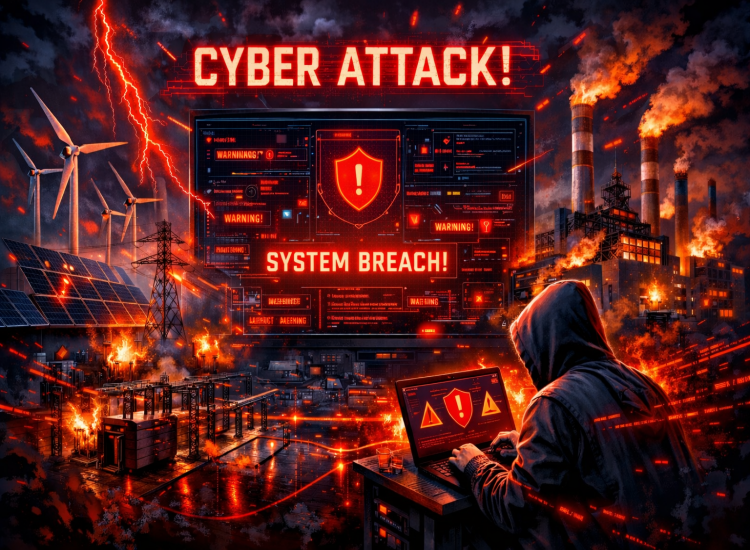
The digital battleground continually shifts, and recent reports from Dragos highlight a particularly concerning evolution: the Electrum Group's targeted campaign against the Polish electric system. This incident marks a pivotal moment, representing one of the first significant cyberattacks explicitly focused on distributed energy resources (DERs) within a national grid infrastructure. For cybersecurity professionals entrenched in the complexities of critical infrastructure protection, this development underscores an urgent need to reassess traditional defense postures and embrace more nuanced, anticipatory strategies. The Electrum Group’s actions are not merely a headline; they are a stark technical exposition of emerging threats that demand a deep dive into their methodologies and the vulnerabilities they exploit.
Understanding the Electrum Group's Strategic Shift
The Electrum Group, a sophisticated threat actor, has demonstrated a calculated progression in their capabilities and targeting. While their specific affiliations and motivations are often subject to ongoing intelligence analysis, their operational footprint suggests a well-resourced entity with a clear intent to disrupt and potentially disable critical energy assets. Unlike earlier, broader campaigns that might have focused on IT networks as a precursor to OT access, this reported activity in Poland appears to have honed in directly on the operational technology (OT) layer, specifically leveraging the expanding attack surface presented by DERs. Their methods indicate a meticulous reconnaissance phase, likely involving deep analysis of grid architectures, communication protocols, and the specific control systems governing these distributed assets. This level of precision suggests not a smash-and-grab operation, but rather a strategic play aimed at maximum impact and psychological deterrence. The implications extend far beyond immediate disruption, potentially eroding public confidence and creating long-term instability in energy markets.
Targeting Distributed Energy Resources: A Technical Vulnerability
The focus on Distributed Energy Resources (DERs) represents a significant strategic choice by the Electrum Group. Modern electric grids are increasingly integrating DERs—solar farms, wind turbines, battery storage systems, and even smart microgrids—to enhance resilience, reduce carbon emissions, and decentralize power generation. While offering numerous benefits, this architectural shift introduces a complex web of interconnected devices, communication pathways, and control systems, each a potential point of ingress for a determined adversary. These systems often operate at the edge of the grid, sometimes with less robust security postures compared to traditional, centralized generation assets.
Technically, DERs rely heavily on various communication protocols, both standard IT protocols like TCP/IP for supervisory control and data acquisition (SCADA) systems, and specialized industrial protocols such as DNP3, Modbus, or IEC 61850 for direct device control. The integration often involves converting these signals, creating potential vulnerabilities at translation points or through misconfigured gateways. Furthermore, the sheer volume and geographical dispersion of DERs make comprehensive security monitoring and patch management a formidable challenge. An attacker targeting DERs might exploit vulnerabilities in communication links, insecure device configurations, or even supply chain weaknesses in the hardware and software components used within these distributed systems. The goal could be to overload local grid segments, cause frequency or voltage instability, or create localized blackouts by manipulating power flows or shutting down critical generation units.
Attack Vectors and Exploitation Techniques
The Electrum Group's success in targeting Poland's electric system likely stemmed from a combination of advanced persistent threat (APT) techniques. Initial access could have been gained through spear-phishing campaigns directed at personnel with access to DER control networks, exploiting unpatched vulnerabilities in IT infrastructure connected to OT, or even leveraging supply chain compromises within the DER ecosystem itself. Once initial access is established, the adversary would likely engage in extensive network reconnaissance to map the DER topology, identify critical control points, and understand the operational logic of the targeted systems. This phase often involves using specialized tools to scan for open ports, identify programmable logic controllers (PLCs) or remote terminal units (RTUs), and potentially sniff industrial control traffic.
Lateral movement within the OT network is crucial. The Electrum Group would seek to elevate privileges, perhaps by exploiting weak authentication mechanisms, default credentials, or known vulnerabilities in industrial software. Their objective would be to gain direct control over DER components, such as inverters, circuit breakers, or generator controllers. Exploitation could involve issuing malicious commands to manipulate power output, force emergency shutdowns, or inject erroneous data into grid management systems, thereby misleading operators and potentially inducing cascading failures. The subtle manipulation of DERs, rather than outright destruction, could be a more insidious tactic, designed to create intermittent faults, degrade grid performance, and instill uncertainty, making detection and recovery exceptionally difficult.
Mitigating the Evolving Threat to Energy Grids
Defending against such sophisticated attacks requires a multi-layered, proactive approach that extends beyond conventional perimeter defenses. The principles of Zero Trust, while challenging to implement in brownfield OT environments, must be rigorously applied to new DER deployments and progressively integrated into existing infrastructure. This involves strictly verifying every user, device, and application attempting to access critical control systems, regardless of their location within the network. Network segmentation, creating micro-perimeters around critical DER assets and their controllers, is paramount to contain breaches and prevent lateral movement. Each segment should have robust ingress/egress filtering and continuous monitoring.
Furthermore, comprehensive asset inventories are no longer a mere compliance exercise but a fundamental security imperative. Understanding every device, its firmware version, configurations, and communication patterns within the DER landscape is critical for identifying vulnerabilities and detecting anomalies. Robust vulnerability management programs, including regular patching and configuration hardening, are essential, albeit often complex to execute in operational environments where uptime is paramount. Advanced threat detection mechanisms, leveraging behavioral analytics and machine learning, are necessary to identify deviations from normal operational baselines that could signify an attack in progress. This includes monitoring for unusual command sequences, unauthorized configuration changes, or anomalous communication patterns on industrial protocols. Effective incident response plans, specifically tailored for OT/ICS environments, must be regularly tested and refined, ensuring that operators can quickly detect, contain, and recover from compromises with minimal disruption to energy supply.
The Imperative of Intelligence and Collaboration
The Electrum Group's attack on Poland's grid vividly illustrates the indispensable role of actionable threat intelligence. Organizations like Dragos provide critical insights into adversary TTPs, enabling asset owners to proactively strengthen their defenses against specific, known threats. This intelligence sharing must transcend national borders and industry silos, fostering a collaborative ecosystem where energy sector stakeholders, government agencies, and cybersecurity researchers can exchange information rapidly and securely. Such collaboration is vital not only for defensive posture but also for collective deterrence. Understanding the adversary's capabilities and intent, and communicating this effectively, creates a unified front against those seeking to weaponize digital infrastructure. By integrating global threat intelligence into local operational security, energy companies can anticipate evolving attack methodologies and allocate resources more effectively to protect their most critical assets.
Fortifying Our Energy Future
The attack on Poland's electric system by the Electrum Group is a powerful reminder that critical infrastructure remains a prime target for sophisticated adversaries. It underscores the evolving threat landscape, particularly the increasing focus on Distributed Energy Resources as vulnerable entry points. Securing our energy future demands a proactive, intelligence-driven approach that combines robust technical controls like Zero Trust and network segmentation with vigilant monitoring, comprehensive vulnerability management, and well-rehearsed incident response protocols. The lessons learned from this incident must galvanize the global cybersecurity community to bolster defenses, share insights, and foster resilient energy grids capable of withstanding the relentless pressures of cyber warfare. Continuing to invest in cutting-edge security technologies and, crucially, in the skilled professionals who operate and defend these systems, is not merely an operational necessity but a foundational requirement for national security and economic stability.
