Navigating the OT Security Landscape: A Comparison of Claroty, Nozomi Networks, and Dragos

The Critical Importance of OT Security in 2025
The operational technology (OT) security landscape has evolved dramatically in recent years, with industrial environments facing unprecedented cybersecurity challenges. As we move through 2025, the convergence of IT and OT networks, coupled with the rapid expansion of Industrial Internet of Things (IIoT) devices, has created a complex security environment that traditional IT security solutions simply cannot address. Organizations operating critical infrastructure, manufacturing facilities, energy production, and other industrial environments require specialized security platforms designed specifically for OT environments.
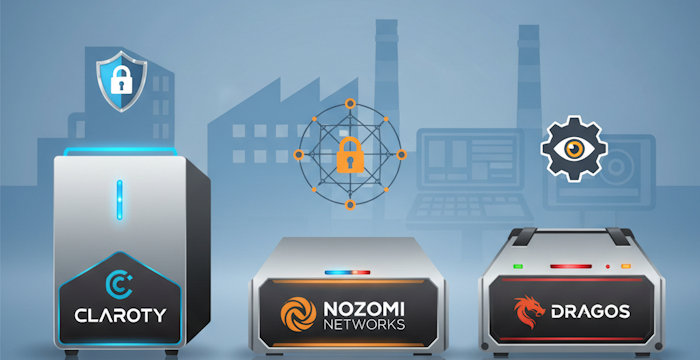
In this comprehensive analysis, we'll examine three leading OT security platforms that have emerged as market leaders: Claroty, Nozomi Networks, and Dragos. Each offers unique approaches to securing industrial control systems (ICS), SCADA environments, and other operational technology assets. Understanding the strengths, capabilities, and implementation methodologies of these platforms is essential for organizations seeking to protect their critical operational infrastructure from increasingly sophisticated threats.
The Unique Challenges of OT Security
Before diving into platform comparisons, it's important to understand why OT security differs fundamentally from traditional IT security. OT environments prioritize availability and safety above all else – a stark contrast to IT's traditional CIA (confidentiality, integrity, availability) triad hierarchy. When an IT system goes down, business operations may be disrupted; when an OT system fails, physical consequences can include equipment damage, environmental incidents, or even human safety risks.
OT environments also present unique technical challenges:
- Legacy systems with decades-long lifecycles that cannot be easily patched or updated
- Proprietary protocols and specialized hardware not recognized by traditional security tools
- Air-gapped or isolated networks with limited connectivity
- 24/7 operational requirements with minimal maintenance windows
- Regulatory compliance requirements specific to industrial sectors
- Convergence with IT networks creating new attack vectors
These challenges require specialized security solutions built from the ground up for industrial environments. Let's examine how Claroty, Nozomi Networks, and Dragos approach these challenges.
Vendor Overview: Market Positioning and Core Philosophies
Claroty: The Enterprise-Focused CPS Protection Platform
Claroty has positioned itself as a comprehensive cyber-physical systems (CPS) protection platform, expanding beyond traditional OT security to encompass broader industrial environments. According to the 2025 Gartner Magic Quadrant for CPS Protection Platforms, Claroty has been positioned highest for Ability to Execute and furthest for Completeness of Vision.
Claroty's core philosophy centers on providing deep visibility into industrial networks while offering a flexible deployment approach that can adapt to various industrial environments. Their platform emphasizes rapid time-to-value and a consolidated approach that reduces the need for multiple point solutions.
Nozomi Networks: The OT/IoT Visibility Specialist
Nozomi Networks has built its reputation on providing exceptional visibility into OT and IoT environments through its Guardian platform. The company emphasizes its purpose-built approach for industrial environments and its ability to support both IT and OT security teams with actionable intelligence.
Nozomi's philosophy focuses on operational resilience, with a platform designed to help organizations maintain continuous operations while addressing cybersecurity risks. Their approach combines network monitoring with endpoint visibility and AI-powered analytics to provide comprehensive protection.
Dragos: The Threat Intelligence-Driven Defender
Dragos differentiates itself through its deep focus on industrial threat intelligence and incident response capabilities. Founded by former ICS incident responders, Dragos emphasizes its "built by defenders, for defenders" approach and its understanding of real-world industrial attacks.
The Dragos philosophy centers on intelligence-driven security, with their platform continuously updated with insights from their threat intelligence team. They focus on providing contextualized alerts that help defenders quickly understand and respond to threats without disrupting operations.
Feature Comparison: Core Capabilities
Asset Visibility and Inventory
Asset visibility forms the foundation of any effective OT security program. You can't protect what you can't see, and in complex industrial environments, maintaining an accurate inventory of assets is particularly challenging.
Claroty offers multiple asset discovery methods, including passive monitoring, active querying (with their Safe Queries technology), and project file analysis. Their platform can identify assets down to the firmware version and component level, providing deep visibility into industrial control systems. Claroty's asset inventory capabilities extend to IT, OT, IoT, and IIoT devices, with automatic classification and risk scoring.
Nozomi Networks provides asset discovery through its Guardian sensors, which can be deployed throughout an industrial network. Their platform supports both passive monitoring and Smart Polling (their active querying technology) to build a comprehensive asset inventory. Nozomi's Guardian Air adds wireless spectrum monitoring to detect devices communicating over wireless protocols. Their Asset Intelligence service enhances device classification accuracy and provides vulnerability information.
Dragos takes a multi-collection approach to asset discovery, supporting both passive and active monitoring methods. Their platform is particularly strong in contextualizing assets within industrial processes, helping teams understand the operational significance of each device. Dragos emphasizes the importance of understanding communication patterns between assets to identify potential security issues.
Threat Detection Capabilities
Detecting threats in OT environments requires specialized approaches that understand industrial protocols and normal operational patterns.
Claroty employs multiple detection methods, including signature-based detection, anomaly detection, and behavioral analytics. Their platform is continuously updated with threat intelligence from their Team82 research group, which has discovered numerous vulnerabilities in industrial systems. Claroty's detection capabilities are designed to identify both known threats and zero-day attacks through behavioral analysis.
Nozomi Networks leverages AI and machine learning for threat detection, with their platform analyzing network traffic to identify anomalies and potential threats. Their Threat Intelligence service provides early awareness of OT and IoT vulnerabilities and threats. Nozomi's approach combines signature-based detection with behavioral analytics to identify both known and unknown threats.
Dragos stands out for its intelligence-driven threat detection approach. Their platform includes detection content based on real-world industrial attacks observed by their threat intelligence team. Dragos provides four types of detection (threat behavior, vulnerability, misconfiguration, and operational) to give defenders comprehensive visibility into potential security issues. Their weekly Knowledge Pack updates ensure the platform stays current with emerging threats.
Vulnerability Management
Managing vulnerabilities in OT environments presents unique challenges, as traditional patching approaches may not be feasible due to operational constraints.
Claroty provides automated vulnerability assessment capabilities that identify vulnerable assets without disrupting operations. Their platform correlates asset information with vulnerability databases to identify potential security issues. Claroty emphasizes practical remediation options, including compensating controls when patching isn't possible.
Nozomi Networks offers vulnerability assessment through its Guardian platform, identifying vulnerable assets and providing remediation guidance. Their Asset Intelligence service enhances vulnerability management by providing information about known vulnerabilities in discovered assets. Nozomi's approach includes prioritization based on risk to help teams focus on the most critical issues.
Dragos takes a risk-based approach to vulnerability management, focusing on the approximately 6% of OT vulnerabilities that require immediate action. Their platform provides OT-corrected CVSS scores and a "Now, Next, Never" prioritization framework to help teams focus on what matters most. Dragos emphasizes practical mitigations when patching isn't feasible, helping teams implement compensating controls to reduce risk.
Network Monitoring and Protection
Monitoring industrial networks requires deep protocol support and an understanding of normal operational patterns.
Claroty supports over 450 industrial protocols, providing deep visibility into industrial network traffic. Their platform can automatically define and recommend network policies based on observed communication patterns. Claroty's network protection capabilities include integration with existing firewalls and network access control solutions to implement segmentation and enforce security policies.
Nozomi Networks supports over 500 industrial protocols through its Guardian platform. Their approach combines passive monitoring with Smart Polling to provide comprehensive visibility into industrial networks. Nozomi's platform can identify unauthorized communications and potential network-based attacks, alerting teams to potential security issues.
Dragos supports over 600 industrial protocols, providing extensive coverage of industrial environments. Their platform emphasizes passive-first monitoring to avoid disrupting operations, with active collection options available when needed. Dragos's network monitoring capabilities provide the foundation for their threat detection and asset visibility features.
Implementation Methodologies: Deployment Approaches
Claroty's Implementation Methodology
Claroty offers flexible deployment options to accommodate various industrial environments. Their platform can be deployed:
- Cloud-Based (xDome): A SaaS-based solution that provides rapid deployment and centralized management.
- On-Premises (CTD): For organizations with strict data sovereignty requirements or limited connectivity.
- Hybrid: Combining on-premises sensors with cloud-based management.
Claroty's implementation typically follows a phased approach:
- Discovery Phase: Initial deployment of sensors to establish baseline visibility.
- Assessment Phase: Analysis of discovered assets and communication patterns.
- Protection Phase: Implementation of security policies and continuous monitoring.
- Optimization Phase: Ongoing refinement of security controls and expansion of coverage.
Claroty emphasizes rapid time-to-value, with initial deployment typically completed within days rather than weeks or months.
Nozomi Networks' Implementation Methodology
Nozomi Networks offers multiple deployment options:
- Cloud-Based (Vantage): SaaS platform for centralized management and analysis.
- On-Premises (CMC): Central Management Console for environments requiring local data processing.
- Distributed: Multiple sensors and collectors deployed throughout the industrial environment.
Nozomi's implementation methodology typically includes:
- Planning and Assessment: Identifying deployment locations and requirements.
- Deployment: Installing sensors and collectors at strategic network points.
- Baseline Establishment: Learning normal network behavior and asset communication patterns.
- Tuning and Optimization: Refining detection parameters and alert thresholds.
- Expansion: Extending coverage to additional areas of the industrial environment.
Nozomi offers professional services to assist with implementation, including their Fast Track Service Packages for accelerated deployment.
Dragos's Implementation Methodology
Dragos takes a defender-focused approach to implementation:
- On-Premises: Primary deployment model with local processing and storage.
- Distributed: Multiple sensors deployed throughout the industrial environment.
- Ruggedized Options: Hardened sensors for harsh industrial environments.
Dragos's implementation methodology emphasizes operational considerations:
- Architecture Planning: Designing a deployment architecture that aligns with operational requirements.
- Sensor Deployment: Strategic placement of sensors to maximize visibility.
- Baseline Establishment: Learning normal operational patterns and asset behaviors.
- Detection Tuning: Customizing detection parameters to reduce false positives.
- Response Planning: Developing playbooks and procedures for responding to detected threats.
Dragos provides detailed deployment guidance, including their "Essential Strategies for Dragos Platform Sensor Deployment" guide to help organizations maximize the value of their implementation.
Industry-Specific Use Cases
Energy Sector Implementation
The energy sector faces unique challenges, including regulatory requirements like NERC CIP and the need to protect critical infrastructure from nation-state threats.
Claroty has been implemented in numerous energy utilities, helping them comply with regulatory requirements while protecting critical infrastructure. Their platform's ability to identify unauthorized changes to control systems and detect potential attacks makes it well-suited for energy environments. Claroty's secure remote access capabilities are particularly valuable for utilities managing geographically distributed assets.
Nozomi Networks has strong adoption in the electric utility sector, with their platform helping utilities monitor substations and generation facilities. Their support for protocols like IEC 61850 and DNP3 makes them well-suited for energy environments. Nozomi's NERC CIP compliance capabilities help utilities meet regulatory requirements while improving their security posture.
Dragos has deep expertise in the energy sector, with their platform deployed in numerous electric utilities and oil and gas facilities. Their threat intelligence includes specific information about threat groups targeting energy infrastructure, helping defenders understand and mitigate relevant threats. Dragos's Neighborhood Keeper collective defense community includes many energy sector participants, enabling shared threat intelligence while preserving operational privacy.
Manufacturing Implementation
Manufacturing environments present challenges including diverse equipment types, proprietary protocols, and the need to maintain continuous production.
Claroty has been implemented in manufacturing facilities across various industries, helping organizations protect production systems while maintaining operational efficiency. Their platform's ability to identify vulnerabilities in industrial controllers and HMI systems is particularly valuable in manufacturing environments. Claroty's network segmentation capabilities help manufacturers implement defense-in-depth strategies without disrupting production.
Nozomi Networks provides manufacturing-specific capabilities, including support for protocols commonly used in factory automation. Their platform helps manufacturers identify unauthorized changes to production systems and detect potential security incidents. Nozomi's anomaly detection capabilities can identify unusual behavior that might indicate a security issue or impending equipment failure.
Dragos offers manufacturing-specific content and detection capabilities, helping organizations protect production systems from cyber threats. Their platform's ability to understand the context of industrial processes helps manufacturing teams quickly assess the potential impact of security issues. Dragos's playbooks provide guidance for responding to manufacturing-specific security incidents without disrupting production.
Critical Infrastructure Implementation
Critical infrastructure sectors like water, transportation, and healthcare require specialized security approaches due to their essential nature and potential public safety implications.
Claroty has been implemented in various critical infrastructure sectors, including water utilities, transportation systems, and healthcare facilities. Their platform's ability to monitor building management systems and medical devices makes it well-suited for diverse critical infrastructure environments. Claroty's risk-based approach helps critical infrastructure operators prioritize security efforts based on potential impact.
Nozomi Networks provides capabilities specific to various critical infrastructure sectors, including water/wastewater, transportation, and healthcare. Their platform helps operators monitor critical systems and detect potential security issues before they impact operations. Nozomi's Guardian Air wireless monitoring is particularly valuable in facilities with wireless industrial devices.
Dragos has experience securing various critical infrastructure sectors, with specific content and detection capabilities for water utilities, transportation systems, and other essential services. Their platform helps operators understand the potential impact of security issues on critical operations. Dragos's incident response services provide additional support for critical infrastructure operators dealing with security incidents.
Strengths and Limitations
Claroty
Strengths:
- Comprehensive visibility across IT, OT, IoT, and IIoT environments
- Multiple asset discovery methods, including passive, active, and project file analysis
- Flexible deployment options (cloud, on-premises, hybrid)
- Strong secure remote access capabilities
- Extensive protocol support (450+ industrial protocols)
- Recognized leader in the 2025 Gartner Magic Quadrant for CPS Protection Platforms
Limitations:
- May require significant tuning in complex environments
- Cloud-based deployment (xDome) may not be suitable for all industrial environments
- Integration with some legacy systems may require additional configuration
Nozomi Networks
Strengths:
- Strong asset discovery and classification capabilities
- Wireless monitoring through Guardian Air
- AI-powered analytics for threat detection
- Extensive protocol support (500+ industrial protocols)
- Highly rated by customers for ease of use and effectiveness
- Strong presence in electric utility and manufacturing sectors
Limitations:
- Multiple components may increase deployment complexity
- Some advanced features require additional licensing
- May require professional services for optimal implementation
Dragos
Strengths:
- Intelligence-driven approach with continuous updates
- Deep industrial context and understanding of operational impacts
- Strong incident response capabilities and playbooks
- Extensive protocol support (600+ industrial protocols)
- Risk-based vulnerability management approach
- Neighborhood Keeper collective defense community
Limitations:
- Primarily on-premises deployment model
- May require more resources for initial implementation
- Higher price point compared to some competitors
Selection Criteria for Organizations
When evaluating OT security platforms, organizations should consider several key factors:
- Environment Complexity: The diversity of industrial systems, protocols, and equipment in your environment.
- Deployment Requirements: Whether cloud, on-premises, or hybrid deployment best suits your operational needs.
- Integration Capabilities: How the platform will integrate with existing security tools and operational systems.
- Scalability: The platform's ability to grow with your organization and support additional sites or systems.
- Operational Impact: How the platform's deployment and ongoing operation will affect industrial processes.
- Support and Services: The vendor's ability to provide implementation assistance, training, and ongoing support.
- Threat Intelligence: The quality and relevance of the vendor's threat intelligence for your industry.
- Total Cost of Ownership: Initial costs, ongoing licensing, required infrastructure, and operational overhead.
Conclusion: Choosing the Right OT Security Platform
Claroty, Nozomi Networks, and Dragos each offer robust OT security capabilities with different strengths and approaches. The right choice depends on your organization's specific requirements, existing infrastructure, and security objectives.
Claroty may be the best fit for organizations seeking a comprehensive platform that spans IT, OT, IoT, and IIoT environments with flexible deployment options. Their emphasis on rapid time-to-value and consolidated capabilities makes them well-suited for organizations looking to reduce the complexity of their security stack.
Nozomi Networks excels in providing deep visibility into industrial networks with strong AI-powered analytics. Their platform is particularly well-suited for organizations that value ease of use and require both wired and wireless monitoring capabilities. Nozomi's strong presence in the electric utility sector makes them a compelling choice for energy companies.
Dragos stands out for organizations that prioritize threat intelligence and incident response capabilities. Their defender-focused approach and deep industrial context make them well-suited for organizations facing sophisticated threats or operating in high-risk environments. Dragos's Neighborhood Keeper collective defense community provides additional value through shared threat intelligence.
As industrial environments continue to evolve and face increasingly sophisticated threats, implementing a robust OT security platform is no longer optional—it's essential for maintaining operational resilience and protecting critical infrastructure. By carefully evaluating your requirements and understanding the strengths of each platform, you can select the solution that best addresses your organization's unique OT security challenges.
Looking Ahead: The Future of OT Security
As we move through 2025 and beyond, several trends will shape the future of OT security:
- Increased IT/OT Convergence: The boundaries between IT and OT will continue to blur, requiring security platforms that can span both domains.
- AI-Powered Analytics: Artificial intelligence and machine learning will play an increasingly important role in identifying threats and anomalies in industrial environments.
- Supply Chain Security: Greater focus on securing the industrial supply chain, including hardware and software components used in industrial systems.
- Regulatory Evolution: New regulations and standards will drive increased investment in OT security, particularly in critical infrastructure sectors.
- Collective Defense: Sharing of threat intelligence and defensive strategies across organizations and sectors will become increasingly important.
The leading OT security platforms—Claroty, Nozomi Networks, and Dragos—are well-positioned to address these trends, with ongoing development and innovation to meet evolving security challenges. Organizations that implement these platforms today will be better prepared to address the industrial security challenges of tomorrow.
