The Art and Science of API Hacking: Advanced Techniques for Security Professionals

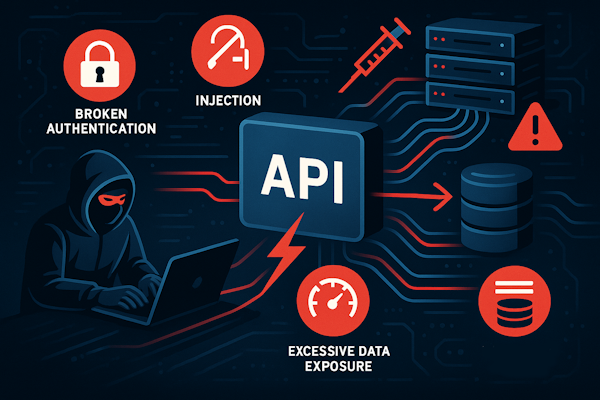
Application Programming Interfaces (APIs) have become the backbone of modern digital ecosystems, enabling seamless communication between disparate systems and applications. As organizations increasingly rely on APIs to power their services, these interfaces have emerged as prime targets for malicious actors. The proliferation of APIs across industries has expanded the attack surface significantly, with Gartner predicting that by 2025, API attacks will become the most frequent attack vector for data breaches in enterprise web applications.
This technical article explores the methodologies, techniques, and tools employed in API hacking, providing security professionals with insights into how attackers exploit API vulnerabilities and how to strengthen defenses against such threats. Understanding these attack vectors is crucial for implementing robust security measures that protect sensitive data and maintain system integrity.
Understanding the API Attack Surface
APIs present unique security challenges compared to traditional web applications. They often expose direct access to backend functionality and data, creating potential entry points for attackers if not properly secured. The attack surface of an API typically includes:
Endpoint Vulnerabilities
APIs expose endpoints that handle specific functions, each representing a potential attack vector. Undocumented or forgotten endpoints ("shadow APIs") are particularly vulnerable as they often lack proper security controls. Attackers employ techniques like fuzzing and directory brute-forcing to discover these hidden endpoints.
Authentication Mechanisms
Authentication systems control access to API resources and represent critical security components. Weak implementation of authentication mechanisms can lead to unauthorized access through credential stuffing, token theft, or authentication bypass techniques.
Authorization Controls
Even with proper authentication, flawed authorization controls can allow attackers to access resources beyond their permission level. This includes accessing other users' data or performing privileged operations.
Data Processing
How APIs handle, validate, and process input data can introduce vulnerabilities like injection attacks, where malicious payloads are inserted into API requests to manipulate backend systems.
Common API Hacking Techniques
Broken Object Level Authorization (BOLA) Attacks
BOLA, ranked as the most critical API security risk in the OWASP API Security Top 10, occurs when an API fails to properly verify that the requesting user has permission to access a specific object. This vulnerability allows attackers to access unauthorized resources by manipulating object identifiers in API requests.
For example, consider an e-commerce API endpoint that retrieves order details:
GET /api/v1/orders/12345
If the API doesn't verify that the authenticated user owns order #12345, an attacker could simply change the order ID to access another user's order information:
GET /api/v1/orders/67890
Real-world impact: In 2019, a major financial services company exposed sensitive financial records of millions of customers through a BOLA vulnerability in their mobile API. Attackers could simply increment a customer ID parameter to access other customers' data.
Authentication Bypass Techniques
Authentication bypass attacks target weaknesses in how APIs validate user identity. Common techniques include:
-
JWT Manipulation: Attackers modify JSON Web Tokens to forge identities or escalate privileges. This can involve tampering with the payload, using weak signing algorithms (like "none"), or exploiting token validation flaws.
-
OAuth Flow Exploitation: Attackers intercept and manipulate OAuth flows to steal access tokens or trick users into authorizing malicious applications.
-
Session Fixation: Forcing a user to use a session ID known to the attacker, allowing them to hijack authenticated sessions.
-
Credential Stuffing: Automated injection of compromised username/password pairs to gain unauthorized access to accounts.
Implementation example of JWT manipulation:
# Original JWT payload
# {"sub":"user123","role":"user","exp":1627484400}

# Modified JWT payload to elevate privileges
# {"sub":"user123","role":"admin","exp":1627484400}

# The attacker then recalculates the signature or exploits weak validation
Injection Attacks
API injection attacks involve sending malicious data through API requests to exploit vulnerabilities in how the API processes input. Common injection techniques include:
- SQL Injection: Inserting SQL commands into API parameters to manipulate database queries.
GET /api/users?id=1 OR 1=1
- NoSQL Injection: Similar to SQL injection but targeting NoSQL databases.
 POST /api/login
{"username": {"$ne": null}, "password": {"$ne": null}}
- Command Injection: Inserting operating system commands into API parameters.
GET /api/data?file=user.txt;rm -rf /
- GraphQL Injection: Exploiting GraphQL APIs through malicious queries that extract excessive data or perform unauthorized operations.
query {
  user(id: "1") {
    id
    username
    email
    password
    creditCardNumber
  }
}
Mass Assignment Attacks
Mass assignment (also known as auto-binding) vulnerabilities occur when an API automatically binds client-provided data to internal object properties without proper filtering. Attackers can exploit this by adding unexpected properties to API requests to modify values that should be restricted.
For example, a user update API might expect:
PUT /api/users/profile
{
"name": "John Doe",
"email": "This email address is being protected from spambots. You need JavaScript enabled to view it."
}
But an attacker could exploit mass assignment by adding:
PUT /api/users/profile
{
"name": "John Doe",
"email": "This email address is being protected from spambots. You need JavaScript enabled to view it.",
"isAdmin": true,
"accountBalance": 999999
}
If the API blindly maps all incoming properties to the user object, the attacker could gain administrative privileges or modify restricted fields.
Rate Limiting Bypass
APIs often implement rate limiting to prevent abuse and denial of service attacks. Attackers employ various techniques to circumvent these controls:
-
IP Rotation: Using multiple IP addresses or proxy services to distribute requests and avoid triggering rate limits.
-
Header Manipulation: Modifying request headers like X-Forwarded-For to spoof source IP addresses.
-
Distributed Attacks: Coordinating attacks across multiple sources to stay under individual rate limits while achieving a high aggregate request volume.
-
Request Timing Manipulation: Carefully timing requests to exploit gaps in rate limiting implementation.
Advanced API Hacking Tools
Security professionals and attackers alike use specialized tools to identify and exploit API vulnerabilities. Understanding these tools is essential for both offensive security testing and defensive strategy development.
Burp Suite
Burp Suite is the industry standard for API security testing, offering comprehensive capabilities for intercepting, analyzing, and modifying API traffic.
Key features for API hacking:
- Proxy: Intercepts and modifies API requests/responses in real-time.
- Repeater: Allows manual manipulation and resending of API requests.
- Intruder: Automates attack patterns against API endpoints.
- Scanner: Identifies common API vulnerabilities through automated testing.
- Extensions: Enhances functionality with specialized API testing modules like JWT Decoder, GraphQL Raider, and Autorize.
Example usage for testing BOLA vulnerabilities:
- Capture a legitimate API request in Proxy
- Send to Intruder
- Configure payload positions around object identifiers
- Use number lists or enumeration techniques to test different object IDs
- Analyze responses for successful access to unauthorized resources
Postman
While primarily designed as an API development tool, Postman has become increasingly popular for security testing due to its user-friendly interface and powerful scripting capabilities.
Key features for API security testing:
- Collections: Organize and automate API test cases.
- Environment Variables: Manage different testing contexts and authentication tokens.
- Pre-request Scripts: Dynamically generate payloads or authentication data.
- Tests: Validate responses and identify security issues.
- Newman: Command-line collection runner for automated testing.
Example of using Postman for JWT testing:
// Pre-request Script to generate a malicious JWT
const payload = {
    "sub": "user123",
    "role": "admin",
    "exp": Math.floor(Date.now() / 1000) + 3600
};

// Sign with a weak key or known secret
const token = generateJWT(payload, "weak-secret");
pm.environment.set("malicious_token", token);
Kiterunner
Developed by Assetnote, Kiterunner is a powerful tool specifically designed for API discovery and content discovery. It excels at finding hidden or undocumented API endpoints through intelligent wordlist-based scanning.
Key features:
- Content Discovery: Identifies API endpoints using specialized wordlists.
- Route Analysis: Understands API routing patterns to discover related endpoints.
- Recursive Scanning: Builds on discovered endpoints to find deeper API paths.
- Performance: Highly optimized for speed, allowing comprehensive scanning of large API surfaces.
Example command for discovering API endpoints:
kr scan https://api.target.com -w routes.kite
mitmproxy
mitmproxy is an open-source interactive HTTPS proxy that allows interception, inspection, and modification of API traffic. It's particularly useful for analyzing mobile app API communications.
Key features:
- TLS Interception: Decrypts HTTPS traffic for analysis.
- Scripting: Automates traffic analysis and modification with Python.
- Command-line Interface: Enables integration into automated testing pipelines.
- Mobile Device Support: Facilitates testing of mobile app APIs.
Example Python script for detecting JWT vulnerabilities with mitmproxy:
from mitmproxy import http
import json
import jwt

def response(flow: http.HTTPFlow) -> None:
    # Check for JWT in Authorization header
    auth_header = flow.request.headers.get("Authorization", "")
    if auth_header.startswith("Bearer "):
        token = auth_header[7:]
        try:
            # Attempt to decode without verification
            decoded = jwt.decode(token, options={"verify_signature": False})
            # Log potentially vulnerable JWT usage
            print(f"[VULNERABLE JWT] {json.dumps(decoded)}")
        except Exception as e:
            print(f"JWT Error: {e}")
OWASP ZAP (Zed Attack Proxy)
ZAP is a free, open-source penetration testing tool maintained by OWASP. It provides automated scanners and tools specifically designed for finding vulnerabilities in web applications and APIs.
Key features for API testing:
- API Scan: Dedicated functionality for testing REST, SOAP, and GraphQL APIs.
- OpenAPI/Swagger Support: Imports API specifications for targeted testing.
- Fuzzing: Identifies input validation vulnerabilities through automated fuzzing.
- Active Scanning: Detects common API vulnerabilities automatically.
- Scripting: Extends functionality with custom JavaScript, Python, or Ruby scripts.
Specialized API Hacking Tools
-
crAPI (Completely Ridiculous API): A vulnerable API designed for security training, allowing security professionals to practice exploitation techniques in a controlled environment.
-
TnT-Fuzzer: Specialized in API fuzzing based on OpenAPI/Swagger specifications.
-
APICheck: A toolset for API testing that can be integrated into CI/CD pipelines.
-
Astra: Automated Security Testing for REST APIs, designed to identify vulnerabilities in API endpoints.
-
GraphQLmap: A tool for testing GraphQL API endpoints for common vulnerabilities.
Real-World API Attack Case Studies
T-Mobile Data Breach (2023)
In January 2023, T-Mobile disclosed a data breach affecting approximately 37 million customer accounts. The attack began in November 2022 and involved exploitation of an API that lacked proper authorization controls. The attacker was able to harvest customer data including names, billing addresses, email addresses, phone numbers, birth dates, and account numbers.
Technical details: The compromised API lacked proper rate limiting and had insufficient authorization checks, allowing the attacker to enumerate customer records by manipulating customer identifiers in API requests. This is a classic example of a BOLA vulnerability combined with inadequate rate limiting.
Peloton API Vulnerability (2021)
Security researchers discovered a critical API vulnerability in Peloton's fitness platform that exposed private user data. The API endpoint for user profile information failed to properly validate user permissions, allowing anyone to access private profiles of other users, including celebrities and government officials.
Technical details: The vulnerability existed in the endpoint, which accepted a user ID parameter. The API performed authentication (verifying the requester was a logged-in user) but failed to perform authorization (verifying the requester had permission to access the specified user's data). By simply changing the user ID parameter, an authenticated user could access any other user's profile information.
Coinbase Account Takeover (2019)
A vulnerability in Coinbase's trading API allowed attackers to bypass two-factor authentication (2FA) and take over user accounts. The vulnerability existed in the API endpoint responsible for trading between different cryptocurrencies.
Technical details: The vulnerability involved a race condition in the API's session handling. When a user initiated a trade, the API temporarily disabled 2FA checks to improve user experience. Attackers exploited this by initiating a trade and simultaneously making account modification requests, bypassing the 2FA protection that would normally be required for sensitive operations.
Defensive Strategies Against API Attacks
Implementing Proper Authentication
-
Use Strong Authentication Mechanisms: Implement OAuth 2.0 with PKCE for mobile applications, or OpenID Connect for authentication.
-
Secure Token Handling: Use short-lived access tokens with proper signature validation and secure storage.
-
Implement MFA: Require multi-factor authentication for sensitive operations and account management.
-
Token Validation: Thoroughly validate all aspects of authentication tokens, including signature, expiration, issuer, and audience.
Authorization Best Practices
-
Implement Object-Level Authorization: Verify that the authenticated user has permission to access the specific resource being requested.
-
Property-Level Authorization: Control access to specific properties within objects based on user permissions.
-
Use Authorization Frameworks: Implement frameworks like RBAC (Role-Based Access Control) or ABAC (Attribute-Based Access Control).
-
Least Privilege Principle: Grant only the minimum permissions necessary for each API operation.
Input Validation and Sanitization
-
Schema Validation: Validate all API inputs against strict schemas that define allowed data types, formats, and ranges.
-
Parameterized Queries: Use parameterized queries or prepared statements for database operations to prevent SQL injection.
-
Input Sanitization: Sanitize inputs to remove potentially malicious content before processing.
-
Output Encoding: Properly encode data returned by APIs to prevent injection attacks on clients.
Rate Limiting and Monitoring
-
Implement Tiered Rate Limiting: Apply different rate limits based on endpoint sensitivity, user roles, and historical usage patterns.
-
Use Token Bucket Algorithms: Implement sophisticated rate limiting algorithms that allow for bursts of traffic while preventing abuse.
-
Monitor API Traffic: Implement real-time monitoring to detect unusual patterns or potential attacks.
-
Implement Circuit Breakers: Protect backend services from being overwhelmed during attacks or failures.
Secure Development Practices
-
API Security Testing: Integrate automated API security testing into CI/CD pipelines.
-
Security Headers: Implement security headers like Content-Security-Policy, X-Content-Type-Options, and Strict-Transport-Security.
-
Error Handling: Implement proper error handling that doesn't leak sensitive information.
-
API Versioning: Use proper API versioning to manage security updates without breaking client applications.
API security has become a critical concern as organizations increasingly rely on APIs to power their digital services. Understanding the techniques and tools used by attackers is essential for security professionals to build robust defenses against API-based threats.
The landscape of API attacks continues to evolve, with new techniques and vulnerabilities emerging regularly. Security teams must stay vigilant, continuously testing their APIs for vulnerabilities and implementing defense-in-depth strategies that address authentication, authorization, input validation, and monitoring.
By adopting a proactive approach to API security, organizations can protect their valuable data and services from the sophisticated attacks that target modern API ecosystems. Remember that API security is not a one-time effort but an ongoing process that requires continuous attention and improvement.
