The Growing Menace: How Cybercrime is Reshaping Healthcare Security and Patient Care

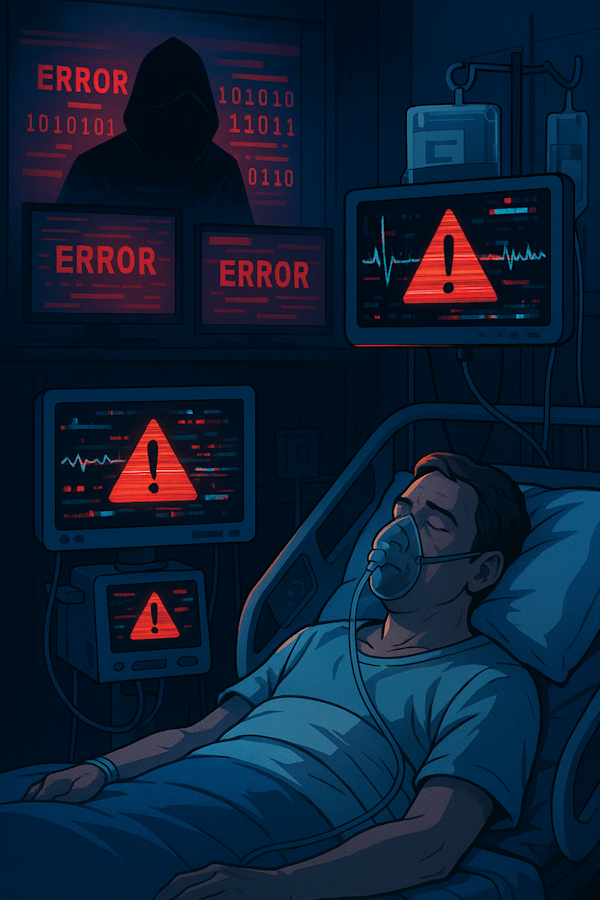
The healthcare sector has emerged as a prime target for cybercriminals, facing an unprecedented surge in sophisticated attacks that threaten not only sensitive patient data but also the very infrastructure that delivers critical care. In 2024, healthcare organizations continue to bear the heaviest financial burden of cybersecurity breaches across all industries, with the average cost of a data breach reaching a staggering $9.8 million—up from $6.5 million in 2019, representing an 8.7% compound annual growth rate. This alarming trend underscores the sector's vulnerability and the increasingly targeted nature of attacks against medical institutions.
The first half of 2025 has already witnessed 444 reported cybersecurity incidents impacting healthcare organizations, comprising 238 ransomware threats and 206 data breach incidents. These statistics paint a concerning picture of an industry under siege, where cybercriminals exploit the critical nature of healthcare services and the wealth of sensitive information they maintain. The consequences extend far beyond financial implications, creating ripple effects that impact operational continuity, patient safety, and ultimately, public trust in healthcare systems.
Financial and Operational Devastation
The financial impact of cybercrime on healthcare organizations is multifaceted and profound. Beyond the immediate costs associated with breach containment and investigation, healthcare providers face significant expenses related to regulatory compliance, legal proceedings, and reputation management. Recent research indicates that healthcare organizations lose approximately $900,000 per day due to operational outages caused by ransomware attacks alone—a figure that excludes ransom payments, recovery costs, and long-term reputational damage.
In 2023, 725 data breaches were reported to the Office for Civil Rights (OCR), exposing or impermissibly disclosing more than 133 million patient records.
The scale of these breaches continues to expand, with healthcare data breaches in 2025 exposing an estimated 275 million records at an average cost of $10.22 million per incident. This trajectory reflects not only the increasing frequency of attacks but also their growing sophistication and scale.
The operational impact of cybersecurity incidents in healthcare settings is particularly severe due to the critical nature of services provided. When ransomware encrypts hospital systems, healthcare providers may lose access to electronic health records, diagnostic imaging systems, laboratory results, and medication management platforms. This disruption forces facilities to revert to manual processes, significantly reducing efficiency and potentially compromising patient care. In severe cases, hospitals have been forced to divert emergency patients to other facilities, cancel elective procedures, and delay critical treatments—all of which carry profound implications for patient outcomes.
Patient Safety: The Hidden Casualty
Perhaps the most concerning aspect of cybercrime in healthcare is its direct impact on patient safety. Unlike breaches in other sectors, cyberattacks against healthcare providers can have immediate and life-threatening consequences. When critical systems are compromised, healthcare professionals may be unable to access vital patient information, including allergies, medication histories, and test results necessary for informed clinical decision-making.
The connection between cybersecurity and patient safety has become increasingly evident. Delays in care resulting from system outages can exacerbate patient conditions, while compromised medical devices or incorrect data may lead to inappropriate treatments. A particularly troubling development is the emergence of attacks specifically designed to manipulate medical data rather than simply encrypting it—potentially altering test results, medication dosages, or treatment plans without detection.
Research has documented cases where ransomware attacks have led to increased mortality rates at affected hospitals. When healthcare providers cannot access critical information systems, diagnostic and treatment delays occur, communication breaks down, and the risk of medical errors increases substantially. These outcomes represent the most severe consequence of cybercrime in healthcare—where financial losses translate directly into human costs.
Evolution of Attack Vectors
The methods employed by cybercriminals targeting healthcare have evolved significantly, becoming more sophisticated and targeted. Hacking, particularly through phishing, ransomware, and malware, currently represents the leading cause of healthcare cyberattacks. Phishing campaigns specifically tailored to healthcare professionals exploit the sector's rapid pace and high-pressure environment, where clinicians may be more likely to click on seemingly urgent communications.
Ransomware attacks have become particularly devastating in healthcare settings. Unlike other industries that might have the luxury of time to address such attacks, healthcare organizations face immediate pressure to restore systems to maintain patient care. This urgency creates leverage for attackers, who increasingly employ double-extortion tactics—not only encrypting data but also threatening to publish sensitive patient information if ransom demands are not met.
The COVID-19 pandemic accelerated this trend, with attackers exploiting the crisis to launch targeted campaigns against healthcare organizations already stretched thin by the public health emergency. These attacks included distributed denial-of-service (DDoS) attacks designed to overwhelm hospital networks, sophisticated phishing campaigns exploiting pandemic-related concerns, and ransomware targeting vaccine research and distribution systems.
Regulatory and Compliance Challenges
The healthcare sector operates within a complex regulatory framework designed to protect patient privacy and data security. In the United States, the Health Insurance Portability and Accountability Act (HIPAA) establishes stringent requirements for safeguarding protected health information (PHI). When breaches occur, healthcare organizations face not only the direct costs of remediation but also potential regulatory penalties, which can reach into the millions of dollars for serious violations.
The regulatory landscape continues to evolve in response to the escalating threat environment. New requirements focus on implementing more robust security controls, conducting regular risk assessments, and developing comprehensive incident response plans. However, compliance with these regulations requires significant resources—financial, technical, and human—which can be particularly challenging for smaller healthcare providers already operating on thin margins.
Beyond regulatory penalties, healthcare organizations face increasing scrutiny from patients, partners, and insurers regarding their cybersecurity posture. Many healthcare institutions now find themselves navigating complex cyber insurance requirements, with premiums rising dramatically in response to the sector's high-risk profile. Some organizations have reported cyber insurance premium increases exceeding 300% in recent years, with more stringent security requirements as conditions for coverage.
The Human Element: Healthcare's Unique Vulnerability
The healthcare sector faces unique cybersecurity challenges related to its workforce and operational environment. Healthcare professionals primarily focus on patient care rather than cybersecurity, creating potential vulnerabilities that attackers readily exploit. The high-pressure, fast-paced nature of healthcare settings can lead to security shortcuts, such as password sharing, improper device usage, or circumventing security protocols perceived as barriers to efficient patient care.
Additionally, the healthcare ecosystem involves numerous third-party vendors and partners, each representing a potential entry point for attackers. From medical device manufacturers to billing services and electronic health record providers, these interconnected relationships create an expanded attack surface that organizations must monitor and secure. Recent statistics indicate that third-party breaches account for a significant percentage of healthcare security incidents, highlighting the importance of comprehensive vendor risk management programs.
The proliferation of connected medical devices—the Internet of Medical Things (IoMT)—further complicates the security landscape. Many of these devices were designed with functionality rather than security as the primary consideration, and many older devices remain in service despite lacking modern security features or the ability to receive security updates. This creates persistent vulnerabilities that sophisticated attackers can exploit to gain access to broader hospital networks.
Building Resilience: The Path Forward
Despite the daunting challenges, healthcare organizations are developing more robust approaches to cybersecurity that balance security requirements with the imperative to deliver uninterrupted patient care. Leading institutions are adopting a defense-in-depth strategy that incorporates multiple layers of security controls, recognizing that no single solution can address the complex threat landscape they face.
Effective healthcare cybersecurity programs increasingly focus on resilience rather than prevention alone. This approach acknowledges that some attacks will inevitably succeed and prioritizes the ability to maintain critical functions during an incident while minimizing recovery time. Key elements include segmented networks that isolate critical clinical systems, comprehensive backup strategies that enable rapid restoration of essential services, and well-rehearsed incident response plans that account for the unique requirements of healthcare environments.
Healthcare-specific security frameworks are emerging to address the sector's unique needs. These frameworks emphasize the connection between cybersecurity and patient safety, providing guidance on securing medical devices, protecting electronic health records, and maintaining continuity of care during security incidents. Organizations like the Health Information Sharing and Analysis Center (H-ISAC) facilitate information sharing about threats and vulnerabilities specific to healthcare, enabling more proactive security measures across the sector.
The Role of Technology and Innovation
Technological innovations are playing an increasingly important role in healthcare cybersecurity. Artificial intelligence and machine learning systems can analyze vast amounts of network data to identify anomalous patterns that might indicate an attack, potentially detecting and responding to threats before they cause significant damage. These technologies are particularly valuable in healthcare settings, where the volume and complexity of data flows make manual monitoring impractical.
Zero trust architecture—which operates on the principle of "never trust, always verify"—is gaining traction in healthcare environments. This approach requires continuous authentication and authorization for all users and devices attempting to access resources, regardless of their location relative to the network perimeter. By implementing granular access controls and continuous monitoring, zero trust models can significantly reduce the impact of successful breaches.
Secure-by-design principles are increasingly being incorporated into healthcare technology development, ensuring that security considerations are addressed throughout the product lifecycle rather than added as an afterthought. This shift is particularly important for medical devices and clinical applications, where security vulnerabilities can have direct patient safety implications.
A Collective Responsibility
The impact of cybercrime on healthcare represents one of the most significant challenges facing the sector today. As attacks continue to increase in frequency, sophistication, and impact, healthcare organizations must elevate cybersecurity from an IT concern to an enterprise-wide priority with direct implications for patient care and organizational viability.
Addressing this challenge requires a collaborative approach involving healthcare providers, technology vendors, regulatory bodies, and patients themselves. Healthcare leaders must foster a culture of security awareness, where every staff member understands their role in protecting sensitive information and maintaining secure operations. Technology vendors must prioritize security in product development and provide transparent information about vulnerabilities and patches. Regulatory frameworks must continue to evolve to address emerging threats while providing practical guidance for implementation.
As healthcare continues its digital transformation, cybersecurity must be recognized as a fundamental component of patient care rather than a separate technical function. By embracing this perspective and implementing comprehensive security programs that address people, processes, and technology, healthcare organizations can continue to harness the benefits of digital innovation while protecting their patients, operations, and communities from the growing threat of cybercrime.
