
Mapping AI Risk Mitigations: A Framework for Securing AI Systems

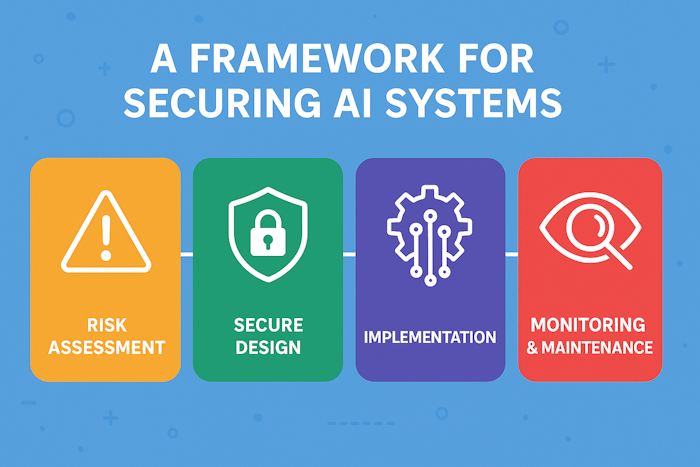
As artificial intelligence continues to transform industries and societies worldwide, organizations face the dual challenge of harnessing AI's transformative potential while effectively managing its inherent risks. The rapid advancement of AI technologies, particularly generative AI, has created an urgent need for structured approaches to AI risk management. This article explores the evolving landscape of AI risk mitigation, drawing from evidence-based research and established frameworks to provide a comprehensive strategy for organizations seeking to implement secure AI systems.
The Current State of AI Risk Management
Recent research conducted by MIT's AI Risk Initiative reveals the complex and multifaceted nature of AI risk management. Through a systematic analysis of 13 key documents on AI risk mitigations, researchers identified 831 specific mitigation strategies that organizations could implement to address AI risks. This extensive evidence scan highlights both the breadth of potential approaches and the need for a structured taxonomy to guide implementation efforts.
The landscape of AI risk management is characterized by varying definitions and approaches, reflecting the emerging nature of this field. Organizations are increasingly recognizing that effective AI governance requires a holistic approach that encompasses technical, operational, governance, and transparency controls. According to Hyperproof's 2024 IT Risk and Compliance Benchmark Report, while 80% of organizations consider AI strategy important for their operations, only 18% have successfully aligned their compliance and risk activities. This gap underscores the need for more structured approaches to AI risk management.
Technical Taxonomy for AI Risk Mitigations
The MIT research team developed a draft taxonomy that categorizes AI risk mitigations into four main categories, providing a valuable framework for organizations to structure their approach to AI risk management:
1. Governance & Oversight Controls
Governance controls focus on establishing organizational structures and policy frameworks that ensure responsible AI development and use. These controls include board oversight mechanisms, comprehensive risk management processes, conflict of interest protections, and whistleblower systems. The emphasis here is on human accountability and ethical conduct throughout the AI lifecycle. Effective governance requires clear delineation of roles and responsibilities for AI security, as outlined in NIST Special Publication 800-218A. Organizations should implement automated toolchains to secure AI development and create secure development environments specifically designed for AI training and testing. This governance layer serves as the foundation for all other risk mitigation efforts, ensuring that AI systems align with organizational values and regulatory requirements.
A large financial institution successfully implemented a three-tiered AI governance structure consisting of an executive AI oversight committee with quarterly meetings to review high-risk AI deployments and approve risk thresholds; a technical AI review board that meets bi-weekly to evaluate model documentation, risk assessments, and security testing results; and embedded AI ethics champions within development teams responsible for day-to-day governance adherence. This structure is supported by automated workflows that route AI systems through appropriate review channels based on risk classification, with high-risk systems requiring full committee review and approval before deployment. The institution found that this layered approach significantly reduced the number of security and compliance issues discovered post-deployment, as potential problems were identified and remediated earlier in the development lifecycle.
2. Technical & Security Controls
Technical controls encompass the engineering safeguards necessary to ensure AI system security and alignment with human values. These include model security measures, alignment techniques, safety engineering practices, and content safety mechanisms. Despite representing only 12% of identified mitigations, these controls are critical for addressing fundamental AI risks. Secure AI software development practices in this category include protecting all forms of AI code, model weights, pipelines, and reward models. Organizations must implement integrity verification mechanisms for AI components and secure both training and testing data against poisoning and tampering. The relatively low representation of technical controls in the research highlights a potential gap in current approaches to AI risk management, particularly in critical areas like model alignment.
A healthcare AI provider implemented a comprehensive model security architecture with several integrated components working in concert to protect their sensitive medical diagnostic systems. The architecture begins with cryptographic signing of model weights using asymmetric key infrastructure with SHA-256 hashing to verify model integrity at runtime. This ensures that the models in production are exactly the ones that were approved and have not been tampered with. The provider also deployed containerized execution environments with kernel-level security policies that restrict model access to only authorized data sources, preventing potential data leakage or unauthorized inputs. A sophisticated runtime monitoring system tracks inference patterns and detects anomalous behavior using statistical profiling, allowing for early detection of potential attacks or misuse. The security architecture is further strengthened by an adversarial testing framework that automatically generates edge cases to probe for model vulnerabilities, helping to identify and address weaknesses before they can be exploited. All of these components are tied together through a secure model registry with immutable audit logs tracking all access and modifications to model artifacts. This architecture successfully prevented a data poisoning attempt when an unauthorized actor attempted to modify training data, as the integrity verification system detected the tampering before model retraining began.
3. Operational Process Controls
Operational controls represent the largest category of mitigations identified in the research, focusing on the processes that govern AI system deployment, monitoring, and incident handling. These controls include testing and auditing procedures, data governance frameworks, and access management systems. Effective operational controls require organizations to design AI systems with security requirements in mind, analyze training and testing data for potential poisoning or tampering, and follow secure coding practices specific to AI development. Regular review and testing of AI model code and components are essential, as is the configuration of secure default settings. Organizations should also implement vulnerability disclosure and remediation processes specifically tailored to AI systems.
A retail recommendation engine implemented a continuous monitoring pipeline that exemplifies best practices in operational controls for AI systems. The pipeline begins with data drift detection using Kolmogorov-Smirnov statistical tests to identify when production data distributions deviate from training data, ensuring that the model remains relevant as customer behaviors evolve. Performance degradation alerts based on precision/recall thresholds configured for each model version provide early warning when the system's effectiveness begins to decline. Before full deployment of any model updates, an automated A/B testing framework evaluates changes against control groups to verify improvements and avoid regressions. The deployment process itself uses canary deployments that expose new model versions to just 5% of traffic initially, with automatic rollback capabilities if anomalies are detected, minimizing the impact of any potential issues. Throughout the entire system, distributed tracing across the inference path identifies latency or performance bottlenecks, ensuring optimal user experience. This comprehensive monitoring system detected a 12% performance degradation when seasonal shopping patterns changed, automatically triggering a model retraining process before business metrics were significantly impacted. The early detection and remediation prevented an estimated $1.2 million in lost revenue that would have resulted from degraded recommendation quality during a peak shopping period.
4. Transparency & Accountability Controls
Transparency controls focus on formal disclosure practices and verification mechanisms that enable external scrutiny and build trust in AI systems. These include comprehensive system documentation, risk disclosure protocols, and incident reporting frameworks. Organizations implementing transparency controls should document AI model selection and training processes, track model versioning and lineage, and maintain comprehensive documentation of the entire AI development lifecycle. These measures not only support regulatory compliance but also foster trust among stakeholders and facilitate more effective risk management through increased visibility into AI system operations.
A government agency deployed an explainability system for its benefits eligibility AI that demonstrates how transparency controls can be implemented effectively in high-stakes decision contexts. The system begins with standardized model cards documenting model architecture, training data characteristics, performance metrics, and intended use cases, providing a foundation of transparency about the system's capabilities and limitations. For each prediction, SHAP (SHapley Additive exPlanations) values are calculated to identify feature importance, helping both administrators and applicants understand which factors most influenced a particular decision. A counterfactual explanation generator shows users what factors would need to change to alter the model's decision, providing actionable insights for applicants who were denied benefits. Agency staff and oversight bodies can access an interactive visualization dashboard that allows them to explore model behavior across different demographic groups, ensuring that the system operates fairly across the population. The system automatically calculates fairness metrics across protected attributes with statistical significance testing, providing ongoing verification of equitable treatment. This comprehensive transparency system enabled the agency to demonstrate compliance with fairness requirements and helped reduce appeals by 23% as applicants better understood decision rationales. The reduction in appeals not only improved citizen satisfaction but also saved the agency approximately 1,200 staff hours per month that would have been spent on appeals processing.
Technical Implementation Strategies for AI Risk Mitigation
Translating the taxonomy of AI risk mitigations into practical implementation requires a structured approach that aligns with established frameworks. Several implementation strategies have emerged to guide organizations in this process, each offering unique technical approaches and methodologies.
Strategy 1: Defense-in-Depth AI Security Architecture
A defense-in-depth approach to AI security implements multiple layers of controls to protect AI systems from various threat vectors. This strategy recognizes that no single control is sufficient to mitigate all risks and therefore implements redundant safeguards at different levels of the AI stack. At the data layer, organizations implement data encryption (AES-256) for data at rest and in transit, data access controls using role-based access control, data integrity verification through checksums, and data provenance tracking. The model layer security includes model encryption, secure model serialization formats, model watermarking techniques, and adversarial robustness testing using frameworks like IBM's Adversarial Robustness Toolbox. Infrastructure layer security utilizes secure compute environments with hardware security modules, containerization with security policies, network segmentation, and runtime application self-protection. Application layer security implements input validation and sanitization, rate limiting, authentication and authorization controls, and output filtering to prevent prompt injection and other attacks. Finally, the monitoring layer deploys behavioral analytics, anomaly detection systems, audit logging with tamper-evident storage, and security information and event management integration.
A major investment bank implemented this defense-in-depth strategy for their trading algorithm AI system with remarkable success. When a sophisticated adversarial attack attempted to manipulate model outputs by sending carefully crafted inputs designed to trigger biased trading decisions, the application layer input validation detected and blocked the malformed requests before they could reach the model. Simultaneously, the monitoring layer identified the pattern of attempts and automatically adjusted detection thresholds to become more sensitive to similar attacks. The security operations team received real-time alerts about the attempted manipulation, allowing them to investigate the source and update security controls across all trading systems. The bank's CISO later reported that the multi-layered approach prevented potential financial losses that could have reached millions of dollars if the manipulated trading decisions had been executed. The incident also prompted the bank to enhance their adversarial testing program, incorporating the attack patterns they observed into their regular security testing to ensure continued resilience against evolving threats.
Strategy 2: Continuous Assurance Pipeline
This strategy integrates security and risk controls directly into the AI development and deployment pipeline, ensuring that risks are identified and mitigated throughout the AI lifecycle rather than as a separate process. Pre-training validation includes automated data quality checks, bias detection in training data using statistical measures like demographic parity and equal opportunity difference, and data provenance verification. During training, controls include privacy-preserving techniques like differential privacy with epsilon tracking, federated learning where appropriate, and regularization techniques to prevent overfitting. Post-training verification involves robustness testing against adversarial examples, fairness auditing across protected attributes, and performance validation across diverse test sets. Deployment gating implements automated security scanning of model artifacts, compliance verification against organizational policies, and risk assessment scoring. Once deployed, runtime monitoring includes drift detection using statistical measures, performance degradation alerts, and security monitoring for unusual access patterns or inference requests.
A healthcare provider implemented this continuous assurance pipeline for their diagnostic AI systems with significant benefits to both security and model quality. During the pre-training validation phase, the automated bias detection identified that their training data had insufficient representation of certain demographic groups, which could have led to performance disparities in clinical diagnoses. The pipeline automatically flagged this issue, halting development until additional diverse training data was incorporated. During the training phase, differential privacy techniques were applied to protect patient confidentiality while still allowing the model to learn effective diagnostic patterns. Post-training verification discovered that the model performed inconsistently on edge cases involving rare comorbidities, prompting additional targeted training to improve robustness. The deployment gating process verified compliance with HIPAA requirements and organizational security policies before allowing the model to enter production. Once deployed, the drift detection system identified when clinical protocols changed for certain conditions, triggering a model update process before accuracy could be affected. The provider's Chief Medical Officer credited the continuous assurance pipeline with preventing at least three potential diagnostic errors that could have occurred if the model weaknesses hadn't been identified and remediated before deployment. Additionally, the automated nature of the pipeline reduced the time required for security and compliance reviews by 68%, allowing new models and updates to reach production more quickly while maintaining rigorous standards.
Strategy 3: Risk-Adaptive Controls Framework
This strategy implements controls that dynamically adjust based on the assessed risk level of specific AI systems or use cases. Rather than applying the same controls universally, this approach tailors the control environment to the specific risk profile of each AI application. The framework begins with a risk classification engine that provides automated scoring of AI systems based on factors like potential harm, autonomy level, domain sensitivity, and scale of deployment. Based on this classification, tiered control sets are applied that scale in rigor and comprehensiveness based on risk classification, from baseline controls for low-risk systems to enhanced and high-assurance control sets for higher-risk applications. Dynamic policy enforcement programmatically applies security policies based on risk classification, with higher-risk systems subject to more stringent controls. Contextual authentication requirements scale based on the risk level of the operation being performed on the AI system, with more sensitive operations requiring stronger authentication. Finally, adaptive monitoring adjusts monitoring intensity and alerting thresholds based on the risk classification of the system, ensuring that higher-risk systems receive more scrutiny.
A smart city initiative implemented this risk-adaptive framework across various AI systems with impressive results in balancing security with operational efficiency. Traffic optimization algorithms were classified as moderate risk and received the baseline control set with standard monitoring, allowing for rapid iteration and updates to improve traffic flow. However, emergency response systems were classified as high risk and automatically received the high-assurance control package, including human oversight requirements, more frequent auditing, and stricter performance thresholds. When a new facial recognition capability was proposed for public spaces, the risk classification engine scored it as very high risk, triggering additional privacy impact assessments and ethics review before approval. The city's technology director noted that the risk-adaptive approach allowed them to focus security resources where they were most needed while avoiding unnecessary bureaucracy for lower-risk systems. This resulted in a 40% reduction in overall approval time for AI projects while actually strengthening security for the most critical systems. The framework also provided clear documentation of risk-based decision making, which proved valuable during a subsequent privacy audit by regulatory authorities. The city has since expanded the framework to include citizen feedback mechanisms for high-risk systems, further enhancing transparency and trust in their AI deployments.
Common Implementation Challenges and Technical Solutions
Organizations implementing AI risk mitigation strategies face several common challenges. Understanding these challenges and their potential solutions is essential for effective implementation.
Challenge 1: Model Opacity and Explainability
Complex AI models, particularly deep learning systems, often function as "black boxes" where the relationship between inputs and outputs is not easily interpretable. This opacity creates significant challenges for risk assessment and mitigation. Organizations struggle to understand how models arrive at specific decisions, making it difficult to identify potential biases, vulnerabilities, or failure modes. Regulatory requirements increasingly demand explainability, particularly for high-stakes decisions affecting individuals. Without explainability, organizations cannot build trust with stakeholders or effectively debug and improve their models.
To address these challenges, organizations are implementing a range of technical solutions. Local interpretability methods like LIME (Local Interpretable Model-agnostic Explanations) or SHAP (SHapley Additive exPlanations) generate explanations for individual predictions, helping stakeholders understand specific decisions. Global interpretability techniques such as partial dependence plots, feature importance rankings, and rule extraction methods provide insights into overall model behavior and decision boundaries. Where appropriate, organizations are selecting inherently interpretable model architectures like decision trees, linear models, or attention-based neural networks that provide visibility into decision processes. For complex models where direct interpretability is challenging, surrogate models that approximate the behavior of complex models can be trained specifically for explanation purposes. These technical approaches are complemented by explanation interfaces that present model explanations in accessible formats for different stakeholders, from technical teams to end users. A financial services company successfully implemented a combination of SHAP values and custom visualization dashboards for their loan approval AI, allowing loan officers to understand and explain decisions to customers while also enabling compliance teams to verify fair lending practices. The explainability system reduced customer complaints about loan decisions by 35% and helped the company demonstrate regulatory compliance during a fair lending examination.
Challenge 2: Data Poisoning and Backdoor Attacks
Malicious actors may attempt to compromise AI systems by poisoning training data or inserting backdoors that can be triggered later to cause the model to behave in unintended ways. These attacks are particularly insidious because they can be difficult to detect through conventional testing, as the model behaves normally except when presented with specific trigger inputs. The increasing reliance on third-party datasets and pre-trained models amplifies this risk, as organizations may have limited visibility into the provenance and integrity of these components. Once deployed, a compromised model could make harmful decisions or leak sensitive information while appearing to function normally.
Organizations are developing sophisticated defenses against these threats. Data provenance tracking implements cryptographic hashing and digital signatures to verify data integrity throughout the pipeline, ensuring that training data hasn't been tampered with. Anomaly detection in training data deploys statistical outlier detection methods to identify potentially poisoned samples before training begins. Robust training techniques like adversarial training, certified robustness, and differential privacy make models more resistant to poisoning attempts. Model inspection tools can detect potential backdoors by analyzing neuron activation patterns or through systematic input perturbation, identifying suspicious behaviors before deployment. Ensemble approaches train multiple models on different subsets of data and use ensemble methods to reduce the impact of poisoned data on overall system behavior. A cybersecurity company implemented a comprehensive anti-poisoning framework for their threat detection AI that combines data provenance verification, statistical anomaly detection, and neuron activation analysis. The system successfully identified and prevented a sophisticated poisoning attempt that would have created a backdoor allowing certain malware to evade detection. The company now offers their defensive techniques as part of their security services, helping clients protect their own AI systems from similar attacks.
Challenge 3: Model Drift and Performance Degradation
AI models can experience performance degradation over time as the real-world data distribution shifts away from the training distribution, a phenomenon known as model drift. This drift can occur due to changing user behaviors, evolving market conditions, seasonal variations, or other factors that cause the relationship between inputs and outputs to change. Without mechanisms to detect and address drift, models can make increasingly inaccurate or inappropriate decisions, potentially leading to business losses, customer dissatisfaction, or safety issues. The challenge is particularly acute for models operating in dynamic environments where conditions change rapidly.
To combat model drift, organizations are implementing multi-faceted monitoring and adaptation strategies. Statistical drift detection uses techniques like Kolmogorov-Smirnov tests, Jensen-Shannon divergence, or Population Stability Index calculations to detect distribution shifts in input data or model outputs. Continuous performance monitoring tracks key metrics against established baselines, with automated alerts when degradation occurs beyond acceptable thresholds. Concept drift adaptation deploys online learning techniques or sliding window approaches that can adapt to changing data distributions without requiring full retraining. Shadow models run candidate updated models in parallel with production models to evaluate performance before switching, reducing the risk of deploying underperforming updates. Automated retraining pipelines implement CI/CD workflows that can automatically retrain and validate models when drift is detected, ensuring that models remain accurate over time. An e-commerce platform implemented a comprehensive drift detection system for their product recommendation engine that combines statistical distribution monitoring with performance tracking across multiple business metrics. The system automatically detected a significant shift in customer behavior during a major sales event and triggered a model update process that maintained recommendation quality despite the unusual shopping patterns. The platform estimated that this adaptive approach prevented approximately $3 million in lost revenue that would have resulted from degraded recommendations during their highest-traffic period of the year.
Challenge 4: Supply Chain Risks in AI Components
Many AI systems incorporate pre-trained models, third-party libraries, or external data sources, creating supply chain risks that can be difficult to identify and mitigate. Organizations often have limited visibility into the security properties, biases, or vulnerabilities of these components, yet rely on them for critical functionality. The complexity of AI supply chains makes it challenging to track dependencies and understand potential risk exposures. Vulnerabilities in widely-used AI components can create systemic risks affecting multiple systems across an organization or even an entire industry.
To address these supply chain risks, organizations are implementing comprehensive governance and technical controls. Component inventory management maintains a detailed inventory of all AI components, including their sources, versions, and security status, providing visibility into the full supply chain. Dependency scanning automates the identification of known vulnerabilities in AI libraries and components using tools like OWASP Dependency-Check adapted for AI-specific risks. Model vetting procedures establish technical protocols for evaluating third-party models, including security testing, performance validation, and bias assessment before integration into production systems. Secure model serving implements infrastructure that can sandbox third-party models and monitor their behavior, limiting the potential impact of compromised components. Software Bills of Materials (SBOMs) for AI systems document all components, their origins, and security properties, facilitating risk assessment and vulnerability management. A financial services firm implemented a comprehensive AI supply chain security program that includes automated scanning of all third-party models and libraries, contractual security requirements for AI vendors, and continuous monitoring of deployed components. The program identified a critical vulnerability in a widely-used natural language processing library before it was publicly disclosed, allowing the firm to implement mitigations before attackers could exploit the weakness. The firm's proactive approach to supply chain security has become a competitive advantage in securing contracts with security-conscious clients who require assurance about the entire AI supply chain.
Implementation Roadmap for Organizations
Based on the strategies and challenges discussed, organizations can follow a phased implementation roadmap to establish effective AI risk mitigation. The journey begins with foundation building in the first three months, focusing on risk assessment and classification, governance structure establishment, baseline control implementation, inventory management, and initial policy development. This foundation provides the essential structure and visibility needed for more advanced risk management capabilities.
The core implementation phase typically spans months four through nine, during which organizations implement a secure AI development pipeline with integrated security testing and validation throughout the development lifecycle. This phase also includes deploying comprehensive monitoring infrastructure for AI systems, implementing appropriate explainability tools based on model architectures and use cases, developing AI-specific incident response procedures with regular tabletop exercises, and establishing technical training programs for AI developers, operators, and security personnel. These core capabilities address the fundamental requirements for secure AI operations.
As organizations mature their AI risk management practices, they move into the advanced capabilities phase from months ten through eighteen. During this phase, they implement automated risk assessment for new AI systems and significant changes, deploy advanced testing capabilities including adversarial testing and formal verification where applicable, implement continuous assurance pipelines that integrate security throughout the AI lifecycle, establish comprehensive supply chain security controls for AI components, and conduct external security assessments and audits of high-risk AI systems. These advanced capabilities provide deeper protection against sophisticated threats and more comprehensive risk management.
The final phase of optimization and maturity is ongoing, focusing on continuous improvement and adaptation to evolving threats and technologies. Organizations establish key performance indicators for AI security and risk management with regular benchmarking against industry standards, implement feedback loops from incidents and near-misses to improve controls, regularly update their risk management framework based on emerging threats and best practices, participate in or monitor advanced research in AI security, and engage with the broader AI security ecosystem including standards bodies, research communities, and industry groups. This ongoing optimization ensures that AI risk management remains effective as both AI capabilities and threats continue to evolve.
Technical Recommendations for Effective Implementation
Based on the evidence scan and practical experience, several technical recommendations can help organizations implement effective AI risk mitigation. First, organizations should implement comprehensive model lifecycle security that protects AI systems from conception through retirement. This includes using cryptographic techniques like SHA-256 hashing and digital signatures to verify the integrity of training data, model weights, and deployment artifacts throughout the pipeline. Secure model storage with AES-256 encryption at rest and strict access controls prevents unauthorized access to model artifacts. Model versioning systems maintain immutable records of all model iterations, enabling rollback if issues are discovered and providing audit trails for compliance purposes. Secure channels for model deployment with mutual TLS authentication ensure that models cannot be tampered with during deployment. Formal decommissioning procedures for retiring models, including secure deletion of sensitive artifacts, prevent outdated models from creating security vulnerabilities.
Organizations should also adopt a zero trust architecture for AI systems, applying the principle of "never trust, always verify" to all AI components and interactions. This approach implements least privilege access for all AI components, with just-in-time access provisioning that grants permissions only when needed and for the minimum duration necessary. Micro-segmentation isolates AI workloads from other systems, limiting the potential impact of a compromise. Continuous authentication and authorization for all interactions with AI systems ensures that even if credentials are compromised, the window of opportunity for attackers is limited. Runtime application self-protection for AI serving infrastructure provides an additional layer of defense against attacks targeting the model serving environment. Comprehensive monitoring and logging of all access to AI systems, with anomaly detection for unusual patterns, enables rapid identification of potential security incidents.
Establishing formal verification processes provides mathematical assurance of critical AI system properties where possible. Organizations can use formal methods to verify critical properties of AI systems, such as safety constraints or fairness criteria, providing stronger guarantees than testing alone. Automated testing frameworks systematically explore the input space to identify edge cases and potential failure modes. Property-based testing verifies that models maintain invariant properties across inputs, ensuring consistent behavior even in unusual circumstances. Symbolic execution techniques identify potential edge cases and failure modes that might not be discovered through conventional testing. These verification procedures should scale with the risk level of the AI system, with more rigorous verification applied to high-risk applications.
Robust monitoring and alerting systems provide early warning of potential issues and support rapid response. Multi-dimensional monitoring covering performance, security, fairness, and data quality provides a comprehensive view of AI system health. Statistical process control techniques detect subtle shifts in model behavior that might indicate emerging problems. Alerting thresholds based on risk tolerance and business impact ensure that teams focus on the most significant issues. Automated response capabilities for common issues, such as rolling back to previous model versions when performance degrades, reduce the time to mitigate problems. Comprehensive audit logs with tamper-evident storage provide the foundation for incident investigation and compliance reporting.
Finally, organizations should develop AI-specific incident response capabilities to address the unique challenges of AI security incidents. This includes developing playbooks for AI-specific incidents such as data poisoning, model theft, or adversarial attacks, with clear procedures for identification, containment, eradication, and recovery. Forensic capabilities for AI systems, including model behavior analysis, help teams understand the nature and extent of incidents. Regular tabletop exercises simulating AI security incidents build team readiness and identify gaps in response procedures. Containment strategies that can quickly isolate compromised AI components prevent incidents from spreading to other systems. Established communication protocols for AI incidents, including regulatory notification requirements, ensure appropriate stakeholder engagement during incidents.
Effective AI risk mitigation requires a comprehensive, structured approach that addresses governance, technical, operational, and transparency dimensions. By leveraging evidence-based taxonomies and established frameworks, organizations can develop mitigation strategies that enable them to harness the benefits of AI while managing its risks. The journey toward secure AI systems is ongoing, requiring continuous adaptation and refinement of mitigation strategies as technologies evolve and new risks emerge. Organizations that establish robust foundations for AI risk management today will be better positioned to navigate the challenges and opportunities of tomorrow's AI landscape.
As we continue to advance AI capabilities, the importance of effective risk mitigation will only grow. By adopting a systematic, evidence-based approach to AI risk management, organizations can build AI systems that are not only powerful and innovative but also secure, trustworthy, and aligned with human values and societal needs. The frameworks, strategies, and technical approaches outlined in this article provide a roadmap for organizations at any stage of their AI journey, from those just beginning to explore AI capabilities to those with mature AI operations seeking to enhance their security posture. By investing in AI risk mitigation now, organizations can build the foundation for responsible AI innovation that delivers sustainable value while protecting against emerging threats.
