The Convergence of IT and OT: Navigating the Complex Cybersecurity Landscape in Industrial Environments

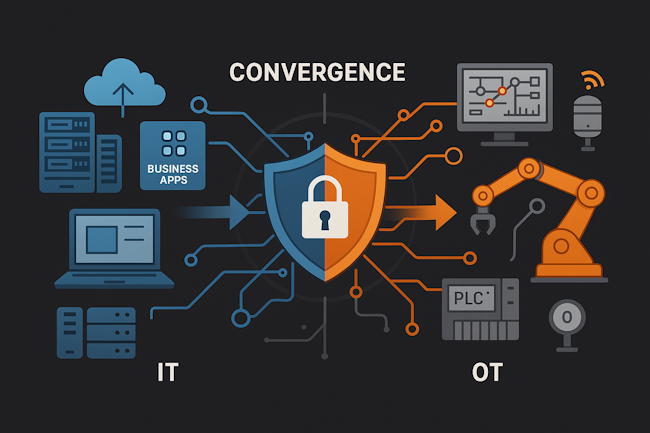
The Merging Digital and Physical Worlds
The digital transformation of industrial environments has accelerated dramatically in recent years, bringing about a profound convergence of Information Technology (IT) and Operational Technology (OT) systems. This convergence represents more than just a technical integration; it signifies a fundamental shift in how organizations approach their operations, data management, and security posture. As we navigate through 2025, this integration continues to deepen, creating both unprecedented opportunities for operational efficiency and significant cybersecurity challenges that organizations must address with increasing urgency.
Traditionally, IT and OT systems operated in isolation, with distinct purposes, technologies, and security requirements. IT systems primarily managed information processing, business applications, and enterprise networks, while OT systems controlled physical processes, industrial equipment, and critical infrastructure. The air gap between these environments once provided a natural security boundary. However, the drive for greater operational efficiency, real-time data analytics, and remote monitoring capabilities has effectively eliminated this separation, creating interconnected environments where the boundaries between digital systems and physical operations have blurred significantly.
This convergence has been further accelerated by the proliferation of Internet of Things (IoT) and Industrial Internet of Things (IIoT) devices, which have introduced millions of new connection points into industrial networks. According to recent industry reports, the number of connected IoT devices worldwide is expected to reach 41.6 billion by the end of 2025, with industrial applications representing a significant portion of this growth. These devices, ranging from smart sensors and actuators to complex industrial control systems, create an expanded attack surface that presents unique cybersecurity challenges for organizations across all sectors.
Understanding the Fundamental Differences Between IT and OT Security
Before delving into the specific challenges of IT/OT convergence, it's essential to understand the fundamental differences between securing IT and OT environments. These differences stem from their distinct operational priorities, technological foundations, and historical development paths.
Operational Priorities: Availability vs. Confidentiality
In traditional IT security, the primary focus has been on the CIA triad: Confidentiality, Integrity, and Availability—often in that order of priority. IT security professionals typically prioritize protecting sensitive data from unauthorized access and ensuring its integrity. While availability is important, scheduled downtime for maintenance and updates is generally acceptable.
In contrast, OT environments follow a different priority order: Availability, Integrity, and then Confidentiality. For industrial systems controlling critical processes such as power generation, water treatment, or manufacturing production lines, continuous availability is paramount. Any unplanned downtime can result in significant financial losses, production delays, safety risks, or even threats to human life. This fundamental difference in priorities creates tension when applying traditional IT security approaches to OT environments.
Lifecycle and Technology Differences
IT systems typically operate on relatively short refresh cycles, with hardware and software updated every 3-5 years. This allows organizations to maintain current security patches and implement modern security controls. In contrast, OT systems often have lifecycles spanning 15-30 years or more. Many industrial control systems (ICS) and Supervisory Control and Data Acquisition (SCADA) systems currently in operation were designed and deployed long before cybersecurity was a significant concern.
These legacy OT systems frequently run on outdated operating systems that no longer receive security updates, utilize proprietary protocols with limited security features, and may lack basic security capabilities such as authentication, encryption, or logging. Furthermore, many OT devices operate with limited computational resources, making it challenging to implement modern security controls without impacting their primary functions.
Regulatory and Compliance Landscapes
The regulatory frameworks governing IT and OT security have also evolved separately. IT security has been shaped by regulations such as GDPR, HIPAA, and PCI DSS, which primarily focus on data protection and privacy. OT security, particularly in critical infrastructure sectors, is governed by industry-specific frameworks such as NERC CIP for the energy sector, AWWA for water utilities, and broader standards like IEC 62443 for industrial automation and control systems.
As convergence accelerates, organizations must navigate this complex regulatory landscape, often finding themselves subject to multiple, sometimes conflicting, compliance requirements. This regulatory complexity adds another layer of challenge to securing converged IT/OT environments.
The Expanding Attack Surface: Common Attack Vectors in Converged Environments
The integration of IT and OT systems, coupled with the proliferation of IoT and IIoT devices, has dramatically expanded the attack surface available to threat actors. Understanding the common attack vectors in these converged environments is crucial for developing effective security strategies.
Remote Access Pathways
Remote access capabilities have become essential for modern industrial operations, allowing for efficient monitoring, maintenance, and troubleshooting. However, these same pathways have emerged as one of the most common attack vectors in converged environments. The 2021 attack on the Oldsmar, Florida water treatment facility provides a sobering example of this risk. In this incident, an attacker gained unauthorized access to the facility's control systems through TeamViewer remote access software and attempted to increase sodium hydroxide levels in the water supply to dangerous concentrations. Fortunately, an alert operator noticed the unauthorized changes and prevented potential harm to the public.
Similarly, the Colonial Pipeline ransomware attack in 2021, which resulted in fuel shortages across the eastern United States, began with compromised VPN credentials that allowed attackers to gain initial access to the company's IT network before eventually impacting operational systems.
Supply Chain Vulnerabilities
The complex supply chains supporting both IT and OT environments present another significant attack vector. Modern industrial systems rely on a diverse ecosystem of hardware, software, and service providers, each representing a potential entry point for attackers. The SolarWinds supply chain attack of 2020 demonstrated how compromises in the software supply chain could impact thousands of organizations, including those operating critical infrastructure.
In 2025, supply chain attacks continue to evolve in sophistication, with attackers increasingly targeting smaller vendors and service providers that may have access to larger industrial networks. These attacks are particularly concerning in converged environments where compromised IT components can potentially provide pathways into critical OT systems.
Insecure IoT and IIoT Devices
The rapid deployment of IoT and IIoT devices has introduced millions of new potential entry points into industrial networks. Many of these devices are deployed with default credentials, lack encryption capabilities, or contain unpatched vulnerabilities. According to recent security research, more than 50% of IoT devices contain critical vulnerabilities that can be readily exploited by attackers.
These vulnerable devices often serve as initial footholds for attackers, who can then move laterally through networks to reach more critical systems. The challenge is compounded by the sheer volume of these devices—many organizations lack comprehensive visibility into all connected devices within their environments, making it difficult to identify and remediate vulnerabilities effectively.
IT/OT Network Segmentation Failures
Proper network segmentation is a fundamental security control in converged environments, designed to limit lateral movement and contain potential breaches. However, maintaining effective segmentation between IT and OT networks has proven challenging for many organizations. As business requirements drive greater integration between these environments, security teams often struggle to implement and maintain appropriate network boundaries.
Segmentation failures can allow attacks that originate in corporate IT networks to spread into operational technology environments. According to the SANS Institute, lateral movement from compromised enterprise IT networks represents the most common attack vector into industrial control systems. This highlights the critical importance of implementing and maintaining proper network segmentation in converged environments.
Unique Cybersecurity Challenges in IoT and IIoT Environments
The proliferation of IoT and IIoT technologies has introduced unique cybersecurity challenges that extend beyond traditional IT and OT security concerns. These challenges require specialized approaches and solutions tailored to the specific characteristics of connected industrial devices.
Scale and Diversity Challenges
The sheer scale and diversity of IoT and IIoT deployments present significant security challenges. Industrial environments may contain thousands or even tens of thousands of connected devices from different manufacturers, operating on different protocols, and with varying security capabilities. This heterogeneity makes it difficult to implement consistent security controls across all devices.
Furthermore, many organizations struggle with basic asset inventory in these environments. Without comprehensive visibility into all connected devices, their configurations, and their security postures, effective security management becomes nearly impossible. Recent studies indicate that up to 40% of organizations lack complete visibility into their IoT and IIoT assets, creating significant blind spots in their security programs.
Limited Security Capabilities
Many IoT and IIoT devices operate with significant constraints on processing power, memory, and energy consumption. These constraints often limit their ability to support robust security features such as strong encryption, comprehensive authentication mechanisms, or detailed logging capabilities. Additionally, many devices lack secure update mechanisms, making it difficult to address vulnerabilities once they are discovered.
These limitations are particularly concerning in industrial environments where devices may control critical physical processes. A compromised sensor or actuator could potentially cause physical damage, production disruptions, or even safety incidents. The security implications extend far beyond data breaches to include potential impacts on physical operations and safety.
Extended Operational Lifespans
While consumer IoT devices might be replaced every few years, industrial IoT devices are often expected to operate reliably for a decade or more. This extended lifespan creates significant security challenges, as devices may outlive vendor support or become vulnerable to new attack techniques that weren't anticipated when they were designed.
Organizations must develop strategies for managing security throughout the entire lifecycle of these devices, including approaches for securing legacy devices that can no longer be updated or replaced. This often requires implementing compensating controls such as enhanced monitoring, network segmentation, and behavioral analysis to detect potential threats to vulnerable devices.
Emerging Security Frameworks and Best Practices
As the challenges of securing converged IT/OT environments have become more apparent, several security frameworks and best practices have emerged to guide organizations in developing comprehensive security programs. These frameworks provide structured approaches to addressing the unique security requirements of industrial environments.
IEC 62443: The Industrial Automation and Control Systems Security Standard
The IEC 62443 series of standards has emerged as the most comprehensive framework specifically designed for industrial automation and control systems security. This internationally recognized standard provides guidance for securing industrial systems throughout their entire lifecycle, from initial design and development through implementation, operation, and maintenance.
IEC 62443 takes a risk-based approach to security, recognizing that different industrial systems may have different security requirements based on their criticality and potential impact. The standard defines four security levels (SL 1-4) with increasing security requirements, allowing organizations to apply appropriate controls based on risk assessments.
A key strength of IEC 62443 is its recognition of the different roles and responsibilities in industrial security, with specific guidance for asset owners, system integrators, and product suppliers. This comprehensive approach makes it particularly valuable for addressing the complex security challenges in converged IT/OT environments.
NIST Cybersecurity Framework and Special Publication 800-82
The National Institute of Standards and Technology (NIST) has developed several resources that are valuable for securing converged environments. The NIST Cybersecurity Framework provides a flexible, risk-based approach to cybersecurity that can be applied across both IT and OT domains. Its five core functions—Identify, Protect, Detect, Respond, and Recover—provide a structured approach to developing comprehensive security programs.
NIST Special Publication 800-82, "Guide to Industrial Control Systems Security," offers more specific guidance for securing industrial control systems. The recently updated revision 3 (released in 2023) specifically addresses the challenges of IT/OT convergence and provides detailed recommendations for securing these environments.
Zero Trust Architecture for Industrial Environments
The Zero Trust security model, based on the principle of "never trust, always verify," has gained significant traction in IT security and is now being adapted for industrial environments. Zero Trust approaches challenge the traditional perimeter-based security model by requiring verification for all users, devices, and applications attempting to access resources, regardless of their location.
Implementing Zero Trust in industrial environments requires careful consideration of operational requirements and constraints. Key elements include:
- Comprehensive asset inventory and visibility across both IT and OT environments
- Micro-segmentation to limit lateral movement within networks
- Least privilege access controls for all users and systems
- Continuous monitoring and validation of security posture
- Automated response capabilities to address potential threats
While full Zero Trust implementation may not be feasible in all industrial environments, organizations are increasingly adopting elements of this approach to enhance security in converged IT/OT systems.
Practical Strategies for Securing Converged Environments
Beyond adopting formal security frameworks, organizations can implement several practical strategies to address the specific challenges of securing converged IT/OT environments and the proliferation of IoT/IIoT devices.
Developing Cross-Functional Security Teams
One of the most effective approaches to addressing the challenges of IT/OT convergence is developing cross-functional security teams that bring together expertise from both domains. Traditional IT security professionals often lack understanding of industrial processes and operational requirements, while OT engineers may not be familiar with modern cybersecurity practices and threats.
By creating teams that combine these skill sets, organizations can develop security strategies that effectively address both IT and OT security requirements. These cross-functional teams should include representatives from IT security, OT engineering, physical security, risk management, and business operations to ensure all perspectives are considered in security decision-making.
Implementing Defense-in-Depth Strategies
Defense-in-depth approaches, which layer multiple security controls to protect critical assets, are particularly important in converged environments. No single security control can address all potential threats, making it essential to implement multiple layers of protection.
Key elements of a defense-in-depth strategy for converged environments include:
- Network segmentation and monitoring to separate IT and OT systems while allowing necessary communication
- Access control systems that enforce least privilege principles across both environments
- Endpoint protection tailored to the capabilities of different device types
- Vulnerability management processes that account for the operational constraints of industrial systems
- Anomaly detection systems that can identify unusual behavior in both IT and OT networks
Securing Remote Access Pathways
Given the prominence of remote access as an attack vector, organizations must implement robust controls for all remote connections to industrial systems. Best practices include:
- Implementing multi-factor authentication for all remote access
- Using secure remote access solutions specifically designed for industrial environments
- Establishing jump servers or secure access workstations for administrative access
- Monitoring and logging all remote sessions for potential security incidents
- Implementing time-limited access and automatic session termination
Developing Incident Response Capabilities for Converged Environments
Traditional IT incident response processes may not be directly applicable to incidents involving industrial systems. Organizations must develop specialized incident response capabilities that account for the unique characteristics and requirements of OT environments.
Key considerations include:
- Developing response procedures that prioritize safety and operational continuity
- Establishing clear decision-making authorities for incidents that impact both IT and OT
- Creating backup and recovery processes tailored to industrial control systems
- Conducting regular exercises that simulate attacks spanning IT and OT environments
- Establishing relationships with industrial cybersecurity specialists who can provide assistance during major incidents
Case Studies: Learning from Recent Incidents
Examining recent security incidents in converged environments provides valuable insights into the real-world implications of IT/OT security challenges and the importance of implementing robust security controls.
Colonial Pipeline Ransomware Attack (2021)
The May 2021 ransomware attack against Colonial Pipeline, which operates the largest refined oil products pipeline in the United States, demonstrates the potential impact of IT security incidents on operational technology. The attack began with a compromised VPN password that allowed attackers to access the company's IT network. Although the ransomware directly impacted only IT systems, Colonial Pipeline proactively shut down pipeline operations due to concerns about potential spread to OT systems and uncertainty about billing capabilities.
The incident resulted in fuel shortages across the eastern United States, panic buying, and temporary price increases. Colonial Pipeline ultimately paid a $4.4 million ransom (some of which was later recovered by law enforcement).
Key lessons from this incident include:
- The critical importance of securing remote access pathways, including implementing multi-factor authentication
- The need for clear separation between IT and OT networks while maintaining visibility across both environments
- The value of having well-defined incident response procedures that address potential impacts across converged environments
- The importance of maintaining operational capabilities even when IT systems are compromised
Oldsmar Water Treatment Facility Attack (2021)
In February 2021, an attacker gained unauthorized access to the water treatment system in Oldsmar, Florida, and attempted to increase sodium hydroxide (lye) levels from 100 parts per million to 11,100 parts per million—a potentially dangerous concentration. Fortunately, an alert operator noticed the unauthorized changes and immediately reversed them, preventing any harm to the public.
Investigation revealed that the attacker gained access through TeamViewer remote access software that had been installed on a system with direct access to control functions. The system was running an outdated Windows 7 operating system and shared the same password across multiple employees.
This incident highlights several common security issues in industrial environments:
- Inadequate access controls and authentication for critical systems
- Use of remote access software not specifically designed for industrial applications
- Lack of network segmentation to separate control systems from external connections
- Insufficient monitoring and alerting for unauthorized system changes
- Continued use of outdated operating systems without compensating controls
The Path Forward: Preparing for Future Challenges
As we look toward the future of IT/OT convergence and industrial cybersecurity, several emerging trends and challenges will shape the security landscape. Organizations must prepare for these developments to maintain effective security postures in increasingly complex environments.
The Impact of AI and Machine Learning
Artificial intelligence and machine learning technologies are being rapidly integrated into both security solutions and industrial operations. These technologies offer significant potential benefits, including enhanced anomaly detection, automated response capabilities, and predictive maintenance. However, they also introduce new security challenges, including potential vulnerabilities in AI systems themselves and the use of AI by threat actors to develop more sophisticated attacks.
Organizations must develop approaches for securing AI systems in industrial environments while leveraging these technologies to enhance their security capabilities. This includes implementing robust validation and testing for AI systems, maintaining human oversight of critical decisions, and developing defenses against AI-enabled attacks.
The Growing Regulatory Landscape
The regulatory environment for industrial cybersecurity continues to evolve, with governments worldwide implementing new requirements for critical infrastructure protection. In the United States, the Cybersecurity and Infrastructure Security Agency (CISA) has expanded its role in providing guidance and oversight for industrial security. The European Union's NIS2 Directive has strengthened cybersecurity requirements for essential service providers, including many industrial sectors.
Organizations must stay informed about evolving regulatory requirements and develop compliance strategies that align with their broader security programs. This includes establishing clear governance structures, maintaining comprehensive documentation of security controls, and developing metrics to demonstrate compliance with applicable regulations.
Building Security into Digital Transformation Initiatives
As organizations continue to pursue digital transformation initiatives that further integrate IT and OT systems, security must be incorporated from the earliest planning stages. Security-by-design approaches, which consider security requirements throughout the development and deployment lifecycle, are essential for creating resilient industrial systems.
Key elements of security-by-design for converged environments include:
- Conducting security risk assessments during the planning phase of transformation initiatives
- Establishing security requirements for all new systems and integrations
- Implementing secure development practices for custom applications
- Conducting thorough security testing before deploying new systems
- Developing security monitoring and maintenance plans for the operational phase
A Holistic Approach to Converged Security
The convergence of IT and OT systems, accelerated by the proliferation of IoT and IIoT technologies, has created a complex security landscape that requires new approaches and strategies. Organizations can no longer treat IT and OT security as separate domains but must develop holistic security programs that address the unique challenges of converged environments.
Successful security in these environments requires a combination of appropriate frameworks, cross-functional expertise, layered technical controls, and well-defined processes. Organizations must balance security requirements with operational needs, recognizing that availability and safety are paramount in industrial environments.
By understanding the fundamental differences between IT and OT security, implementing appropriate security controls, and learning from past incidents, organizations can navigate the challenges of convergence while realizing its significant operational benefits. As digital transformation continues to reshape industrial operations, security must remain a central consideration—not as an obstacle to innovation, but as an enabler of resilient, reliable, and secure industrial systems.
The path forward requires collaboration across traditional boundaries—between IT and OT teams, between security and operations, and between organizations facing similar challenges. By sharing knowledge, best practices, and lessons learned, the industrial community can collectively enhance security in an increasingly connected world.
