The Deepfake Revolution: Understanding the Technology Reshaping Digital Reality

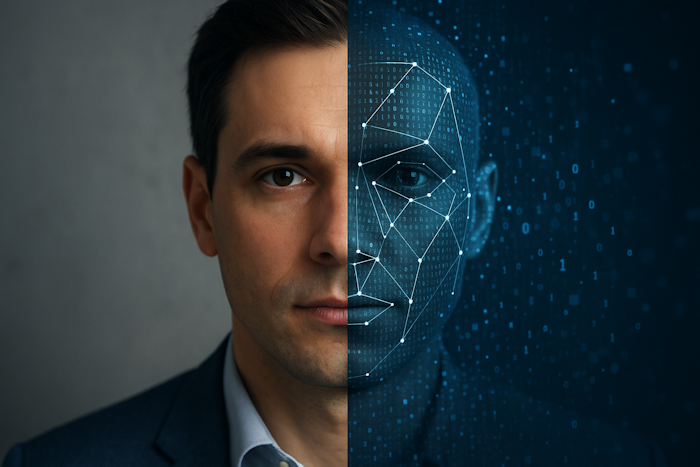
In an era where digital content shapes our perception of reality, deepfakes have emerged as one of the most powerful and potentially disruptive technologies of our time. These artificial intelligence-generated synthetic media can manipulate audio recordings, videos, and photographs to create false yet convincingly realistic content. As we navigate through 2025, the sophistication, accessibility, and implications of deepfake technology have reached unprecedented levels, presenting both remarkable opportunities and profound challenges for individuals, organizations, and society at large.
The rapid evolution of deepfakes has transformed what was once a specialized technical capability into a widely accessible tool, with implications spanning from entertainment and education to cybersecurity and national security. This article explores the intricate world of deepfakes – their technological underpinnings, legitimate applications, malicious use cases, societal impacts, and the emerging countermeasures being developed to mitigate their risks.
The Technological Foundation of Deepfakes
At their core, deepfakes represent the culmination of advances in artificial intelligence, particularly in the domain of generative AI. The technology relies primarily on sophisticated neural networks that learn to create convincing fake media by analyzing vast amounts of existing data. Understanding how deepfakes are created provides crucial insight into both their capabilities and potential vulnerabilities.
The Creation Process
The development of a deepfake typically follows a structured process that has become increasingly streamlined and accessible:
The first step involves comprehensive data collection, where source material of the target individual is gathered from various sources including social media, public appearances, and other publicly available content. This data serves as the foundation upon which the deepfake will be constructed, with the quality and quantity of this source material directly influencing the realism of the final product.
Once collected, this data undergoes preprocessing to clean, organize, and prepare it for model training. This critical phase involves extracting faces from videos, isolating voice samples, and formatting the data to be compatible with the AI frameworks that will be used. The thoroughness of this preprocessing significantly impacts the quality of the resulting deepfake.
The heart of deepfake creation lies in the model training phase, where neural networks – primarily Generative Adversarial Networks (GANs) – are employed. GANs consist of two competing neural networks: a generator that creates synthetic content and a discriminator that evaluates its authenticity. Through an iterative process, these networks essentially compete against each other, with the generator continuously improving its output until it can consistently produce content that the discriminator cannot distinguish from genuine material.
After training, the generation phase begins, where the trained model produces new synthetic content. This is followed by post-processing, where editing software is used to eliminate artifacts and enhance overall quality, further blurring the line between authentic and synthetic content.
Technological Advancements
The technological landscape of deepfakes has evolved dramatically since their emergence. What once required high-end hardware and specialized expertise now runs with minimal computing power and is increasingly accessible to users without technical backgrounds. Cloud-based services and simplified interfaces have democratized access to deepfake creation tools, while the underlying algorithms have become more sophisticated and efficient.
By 2025, the quality gap between rudimentary and professional deepfakes has narrowed significantly. Basic deepfakes can now be created in under 30 seconds using off-the-shelf tools, while high-quality results that were once the domain of specialized studios can be achieved within days using consumer-grade hardware. This accessibility has profound implications for how we must approach the verification of digital content in our daily lives.
Legitimate Applications of Deepfake Technology
While public discourse often focuses on the malicious applications of deepfakes, the technology offers numerous beneficial applications across various sectors. Understanding these legitimate use cases provides important context for balanced policy discussions and technological development.
Entertainment and Creative Industries
The entertainment industry has embraced deepfake technology to enhance storytelling capabilities and reduce production costs. Film studios now use deepfakes to create realistic age transformations for actors, resurrect historical figures for biographical films, and even generate entirely synthetic performers for certain roles. This has opened new creative possibilities while potentially reducing the need for extensive makeup, prosthetics, or casting limitations.
In advertising, companies can create personalized content featuring synthetic spokespersons that can be easily adapted for different markets and languages. The technology allows for efficient localization of content without requiring multiple shoots or talent contracts, significantly reducing production costs while increasing global reach.
Education and Historical Preservation
Educational institutions have begun exploring deepfakes as a means to create immersive historical experiences. By synthesizing historical figures delivering their famous speeches or participating in recreated historical events, educators can bring history to life in ways previously impossible. Museums and cultural institutions are similarly using the technology to restore damaged historical footage or create interactive exhibits that allow visitors to engage with the past in novel ways.
Healthcare Applications
In healthcare, synthetic media technologies related to deepfakes are being used to generate realistic training scenarios for medical professionals. These applications can simulate rare conditions or complex procedures, providing valuable training opportunities without risk to actual patients. Additionally, the technology shows promise for therapeutic applications, such as creating personalized health communication that may improve patient engagement and treatment adherence.
The Dark Side: Malicious Applications and Attack Scenarios
Despite their legitimate uses, deepfakes have gained notoriety primarily due to their potential for harm. The technology has enabled new forms of fraud, disinformation, and harassment that present significant challenges for individuals, organizations, and society.
Financial Fraud and Corporate Exploitation
Perhaps the most financially damaging application of deepfakes has been in the realm of corporate fraud. A landmark case in early 2024 demonstrated the severity of this threat when a finance worker in Hong Kong was defrauded of approximately $25.6 million (HK$200 million) through an elaborate deepfake scam. The worker received a message purportedly from the company's UK-based CFO indicating the need for a secret transaction. Though initially suspicious, the worker was convinced after participating in a video conference call where all participants – including the supposed CFO – were actually deepfake recreations of company executives.
This case exemplifies a growing trend of "executive impersonation" attacks, where deepfakes are used to mimic corporate leaders to authorize fraudulent transactions or extract sensitive information. According to reports from eSecurity Planet, documented financial losses from deepfake-enabled fraud exceeded $200 million in the first quarter of 2025 alone, with projections suggesting this figure will continue to rise as the technology becomes more accessible and sophisticated.
Political Disinformation and Democratic Interference
The political arena has proven particularly vulnerable to deepfake manipulation. Synthetic videos of political figures making inflammatory statements or engaging in compromising behavior have been strategically released to influence public opinion, particularly during election cycles. These fabricated contents can rapidly spread through social media before fact-checkers can respond, potentially swaying voter perceptions and undermining democratic processes.
The challenge is compounded by the "liar's dividend" – a phenomenon where genuine recordings of problematic statements can be dismissed as deepfakes, allowing public figures to evade accountability for their actual words and actions. This erosion of trust in visual and audio evidence threatens the foundation of informed civic discourse and democratic accountability.
Identity Theft and Personal Harassment
On an individual level, deepfakes have enabled new forms of identity theft and personal harassment. Non-consensual intimate imagery created using deepfake technology has become a particularly pernicious form of digital abuse, with victims finding their likeness superimposed into pornographic content without their consent. The psychological harm and reputational damage from such attacks can be severe and long-lasting.
Beyond intimate imagery, identity theft using deepfakes has evolved to include voice cloning for fraudulent authorization, synthetic video for bypassing biometric security systems, and the creation of entirely fictional personas for social engineering attacks. In Hong Kong, authorities reported that stolen identity cards were used in conjunction with AI deepfakes on at least 20 occasions to bypass facial recognition programs, facilitating 90 fraudulent loan applications and 54 bank account registrations in just a three-month period.
Attack Scenario: Multi-Vector Corporate Compromise
A particularly sophisticated attack scenario emerging in 2025 involves multi-vector approaches combining deepfakes with traditional cyber attack methods. In this scenario, attackers first gather intelligence on a target organization through social media analysis and potentially through initial network reconnaissance. They then create deepfake audio of a senior executive to call a mid-level employee, requesting urgent assistance with a sensitive matter.
This initial contact establishes legitimacy and urgency, setting the stage for a follow-up video conference where deepfake representations of multiple executives appear to authorize an emergency funds transfer or request access to secure systems. The psychological pressure of apparent executive authority, combined with manufactured urgency, can override normal security protocols and verification procedures.
Once initial access is gained, the attackers can deploy more traditional malware or ransomware, with the deepfake element serving primarily to bypass human security controls that would normally prevent such access. This blended approach has proven particularly effective against organizations that have strong technical security but have not adequately prepared their workforce to recognize and verify potentially synthetic communications.
Societal Impacts and Ethical Considerations
The proliferation of deepfakes extends beyond specific attack scenarios to broader societal impacts that challenge our fundamental relationship with digital media and information.
The Erosion of Trust in Digital Evidence
Perhaps the most profound impact of deepfakes is their contribution to what scholars have termed "the uncertain future of truth." As the technology to create convincing synthetic media becomes more accessible, the default assumption of authenticity that once accompanied photographic or video evidence is rapidly eroding. This shift has significant implications for journalism, legal proceedings, and everyday information consumption.
In legal contexts, video evidence that was once considered highly reliable now requires additional authentication, potentially complicating prosecutions and civil proceedings. Journalists face the dual challenge of verifying the authenticity of source material while simultaneously combating audience skepticism about even properly verified content. For ordinary citizens, this environment fosters a generalized skepticism that can lead to disengagement from civic discourse or vulnerability to selective belief based on pre-existing biases rather than evidence.
Disproportionate Impacts on Vulnerable Populations
The harms associated with deepfakes are not evenly distributed across society. Research indicates that women are disproportionately targeted for deepfake-based harassment, particularly through non-consensual intimate imagery. Public figures from marginalized communities often face heightened targeting for political deepfakes designed to reinforce stereotypes or incite harassment.
Additionally, communities with limited digital literacy or access to verification tools may be particularly vulnerable to deepfake disinformation. This creates a situation where those with the least resources to combat synthetic media may bear the greatest burden of its negative impacts, potentially exacerbating existing social inequalities.
Regulatory and Policy Responses
Governments worldwide have begun responding to the deepfake challenge with new regulatory frameworks. These approaches vary significantly, from content-specific prohibitions (such as bans on deepfake pornography or election-related deepfakes) to broader transparency requirements for synthetic media. By 2025, many jurisdictions have implemented laws requiring disclosure when AI-generated content is used in certain contexts, particularly in political advertising and commercial applications.
However, regulatory approaches face significant challenges, including jurisdictional limitations in a global digital environment, potential conflicts with free expression principles, and the practical difficulties of enforcement. The most effective approaches appear to combine legal frameworks with industry self-regulation, platform policies, and educational initiatives to build societal resilience against synthetic media manipulation.
Detection and Countermeasures
As deepfake technology advances, so too do the methods for detecting and mitigating its potential harms. A multi-faceted approach combining technological, organizational, and individual strategies offers the most promising path forward.
Technological Detection Methods
Deepfake detection systems leverage inherent flaws in synthetic media to identify manipulated content. These systems analyze visual inconsistencies (such as unnatural blinking patterns or facial movements), audio anomalies (including unusual speech patterns or background noise inconsistencies), and metadata irregularities that may indicate manipulation.
However, the effectiveness of detection technology is in constant flux. In 2023, leading detection systems could identify deepfakes with up to 98% accuracy, but by 2025, that number has dropped to approximately 65% as creators use increasingly sophisticated methods to evade detection. This highlights the ongoing arms race between deepfake creation and detection technologies.
The most promising detection approaches now employ multi-layered strategies that combine multiple analysis methods. These include:
Automated scanning using machine learning algorithms trained on known deepfakes and authentic media to identify suspicious patterns. Metadata analysis that examines file properties, creation timestamps, and digital signatures that might reveal manipulation. Behavioral analytics that identify unusual patterns in how content is distributed or promoted that may indicate synthetic origin. And human expertise for complex cases where automated systems produce uncertain results or where contextual understanding is crucial.
Organizational Strategies
Organizations face particular risks from deepfakes and require comprehensive strategies to address them. Effective approaches include:
Implementing multi-factor authentication systems that don't rely solely on biometric or voice recognition, which can be vulnerable to deepfake spoofing. Establishing clear verification protocols for high-value transactions or sensitive information requests, including out-of-band confirmation through pre-established channels. Conducting regular training to ensure staff are aware of deepfake risks and familiar with verification procedures. And fostering a security culture where questioning unusual requests is encouraged, even when they appear to come from senior leadership.
Financial institutions have been particularly proactive in implementing these measures, with many now requiring multiple verification steps for large transactions and implementing AI-based anomaly detection to flag potentially fraudulent requests.
Individual Protection Strategies
While organizational and technological approaches are crucial, individuals also need strategies to protect themselves in an environment where deepfakes are prevalent:
Practicing critical media consumption by verifying information through multiple sources before accepting or sharing content, especially if it appears surprising or inflammatory. Limiting public personal data by reviewing social media privacy settings and being mindful of the photos and videos shared online that could be used to train deepfake algorithms. Using available verification tools such as reverse image searches, metadata analyzers, and deepfake detection applications that are increasingly available to consumers. And establishing personal verification protocols with close contacts, such as pre-arranged questions or communication channels to confirm identity in suspicious situations.
The Future of Authentication
Looking forward, the most promising approaches to the deepfake challenge involve proactive authentication rather than reactive detection. Content provenance solutions that cryptographically track media from creation through distribution are gaining traction, allowing recipients to verify the origin and edit history of digital content.
The Coalition for Content Provenance and Authenticity (C2PA), which includes major technology companies and media organizations, has developed technical standards for content authentication that are being increasingly adopted. These systems embed cryptographic signatures within content at the point of creation, providing a verifiable record of its origin and any subsequent modifications.
Similarly, digital watermarking technologies are being deployed to mark AI-generated content, making it easier to identify synthetic media. While these approaches face adoption challenges and potential circumvention, they represent a shift toward building authenticity into our digital ecosystem rather than relying solely on after-the-fact detection.
Navigating the Deepfake Era
Deepfake technology represents one of the most significant challenges to digital trust in our increasingly online world. Its dual nature – offering both creative possibilities and destructive potential – requires nuanced approaches that preserve beneficial innovation while mitigating harm.
As we move through 2025 and beyond, the most effective responses will likely combine technological solutions, regulatory frameworks, organizational practices, and individual awareness. The goal is not to eliminate synthetic media – which would be neither possible nor desirable – but rather to create an environment where authenticity can be verified, manipulation can be detected, and accountability can be maintained.
For organizations, particularly those in the IoT and cybersecurity sectors, deepfakes represent both a specific security threat and a broader challenge to digital trust. Integrating deepfake awareness into security frameworks, authentication systems, and staff training is no longer optional but essential for maintaining operational integrity in a world where seeing – and hearing – can no longer be automatically equated with believing.
The deepfake revolution forces us to reconsider fundamental assumptions about digital evidence and authenticity. By understanding the technology, recognizing its legitimate applications, acknowledging its risks, and implementing appropriate safeguards, we can navigate this challenging landscape while preserving the trust that underpins our digital society.
