Securing the Digital Backbone: A Guide to API Management and Security

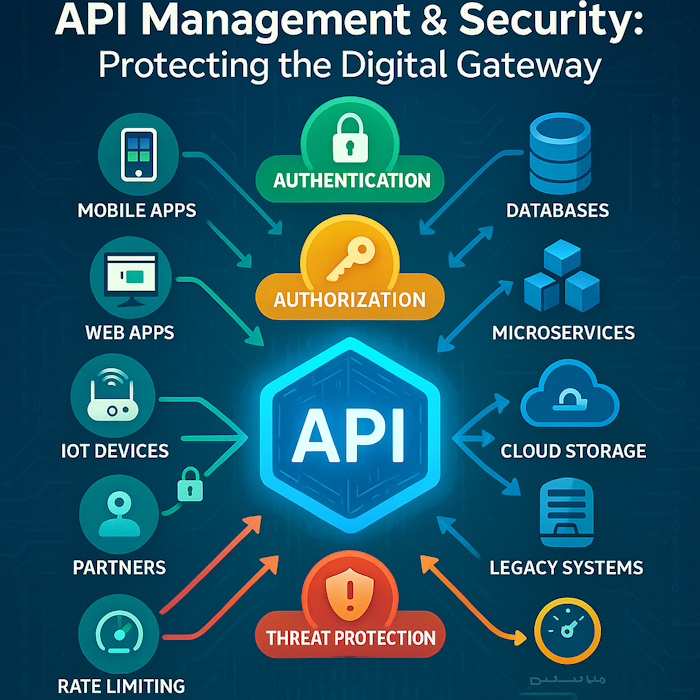
The Critical Role of APIs in Modern Digital Ecosystems
In today's interconnected digital landscape, Application Programming Interfaces (APIs) have evolved from simple integration tools to become the fundamental building blocks of modern software architecture. As organizations accelerate their digital transformation initiatives, APIs serve as the critical connective tissue linking disparate systems, enabling seamless data exchange, and powering everything from mobile applications to IoT devices and cloud services. For the IoT Security Institute and our partners, understanding the evolving API security landscape is no longer optional—it's imperative for maintaining robust security postures in an increasingly complex threat environment.
The statistics tell a compelling story: according to recent industry reports, APIs now account for over 80% of all internet traffic, with the average enterprise managing hundreds or even thousands of APIs across their digital ecosystem. This explosive growth has created an expanded attack surface that threat actors are actively exploiting. High-profile breaches at organizations like T-Mobile, where 76 million users' data was exposed via misused APIs, and Optus, where 10 million customer records were compromised through a neglected legacy API, underscore the severe consequences of inadequate API security measures.
This comprehensive guide explores the critical intersection of API Management (APIM) and API security, providing security professionals, enterprise architects, and technology leaders with actionable insights to implement robust API governance frameworks. We'll examine modern architectural approaches, zero-trust implementation strategies, and practical security controls aligned with the latest OWASP API Security Top 10 recommendations.
Understanding Modern API Management Architecture
Effective API security begins with a solid understanding of API Management architecture. Modern APIM solutions have evolved significantly, adopting sophisticated architectural patterns that separate concerns and enable greater scalability, resilience, and security. The most important architectural concept to grasp is the separation between the control plane and data plane.
Control Plane vs. Data Plane: The Foundation of Modern APIM
The control plane serves as the operational brain of an API management solution, responsible for managing configurations, policies, and global state. It handles critical functions including API configuration management, service discovery, security policy enforcement, and monitoring setup. In contrast, the data plane processes live API traffic, enforcing the policies, authentication rules, and routing configurations defined by the control plane.
This architectural separation delivers several key benefits:
-
Enhanced Scalability: The data plane can scale horizontally to handle traffic spikes without requiring proportional scaling of management components.
-
Improved Resilience: A properly designed data plane continues operating using cached configurations even if the control plane becomes temporarily unavailable.
-
Operational Flexibility: Organizations can deploy data plane components closer to users in regional edge locations while maintaining centralized control.
-
Security Isolation: Separating management functions from traffic processing creates natural security boundaries that limit the blast radius of potential compromises.
Leading APIM solutions implement this architectural pattern in various ways. Apache APISIX uses etcd as a distributed key-value store for configuration propagation between the control and data planes. Kong employs PostgreSQL for synchronizing configurations across gateway nodes. Envoy relies on the xDS API (eXtensible Discovery Service) for dynamic configuration updates.
Configuration Synchronization Models
The mechanism by which the control plane synchronizes configurations with the data plane significantly impacts performance, availability, and security. Three primary models exist:
-
Push Model: The control plane actively pushes updates to the data plane in real-time, ensuring immediate policy enforcement but potentially creating overhead during high-frequency changes.
-
Pull Model: The data plane periodically fetches the latest configuration, reducing control plane load but potentially creating windows where policies are inconsistently applied.
-
Hybrid Model: A combination of push and pull mechanisms that balances immediate updates for critical changes with efficient polling for routine modifications.
Organizations must carefully evaluate these synchronization models based on their specific requirements for consistency, performance, and resilience. High-security environments typically favor push-based models to ensure immediate enforcement of security policy changes, while highly distributed deployments may benefit from hybrid approaches that reduce network overhead.
Implementing Zero Trust Principles in API Security
The traditional perimeter-based security model has proven inadequate for protecting modern API ecosystems. Zero Trust Architecture (ZTA) has emerged as the preferred security model, operating on the fundamental premise of "never trust, always verify" to ensure comprehensive protection across all API interactions.
Core Zero Trust Principles for APIs
Implementing Zero Trust for APIs requires adherence to several core principles:
-
Authenticate Every Request: Every API request must be authenticated regardless of its origin, including those from internal systems or trusted partners. This eliminates the concept of a "trusted network" and treats all traffic as potentially malicious.
-
Enforce Least Privilege Access: API access should be granted based on the principle of least privilege, with scoped tokens and role-based access control (RBAC) providing only the minimal permissions necessary for the specific operation.
-
Continuous Validation: Authentication and authorization should be continuously validated throughout the session, not just at the initial connection point.
-
Microsegmentation: API traffic should be isolated and segmented to contain lateral movement in case of compromise, preventing attackers from pivoting across the environment.
-
Monitor and Analyze Behavior: Security teams should scrutinize not just credentials but also behavior patterns. Unusual sequences of actions, even from authenticated users, should trigger alerts and additional verification.
Practical Implementation Steps
Translating these principles into practical implementation requires a systematic approach:
-
Implement Continuous API Discovery: Maintain an accurate, up-to-date inventory of all APIs, including shadow and deprecated endpoints. Automated discovery tools should continuously scan for unauthorized or undocumented APIs.
-
Deploy Modern Authentication Mechanisms: Utilize OAuth 2.0 and JWTs for token-based authentication, with support for multi-factor authentication for sensitive operations. For internal service-to-service communication, implement mutual TLS (mTLS) to prevent man-in-the-middle attacks and service impersonation.
-
Establish Granular Authorization Controls: Implement fine-grained authorization at both the object level and object property level. This prevents unauthorized access to resources and mitigates risks associated with excessive data exposure.
-
Secure Token Management: Implement robust token lifecycle management with short time-to-live (TTL) policies and automated rotation. Regularly audit token scopes to prevent privilege creep.
-
Deploy API Gateways as Enforcement Points: Utilize API gateways as centralized policy enforcement points that terminate TLS, validate tokens, enforce rate limits, and log comprehensive audit trails.
By systematically implementing these Zero Trust principles, organizations can significantly reduce their API attack surface and create multiple layers of defense against sophisticated threat actors.
OWASP API Security Top 10: Understanding and Mitigating Key Risks
The OWASP API Security Top 10 for 2023-2025 provides a comprehensive framework for understanding and addressing the most critical API security risks. Let's examine each risk category and explore effective mitigation strategies.
API1: Broken Object Level Authorization
Broken Object Level Authorization (BOLA) remains the most critical API security risk, occurring when APIs fail to properly validate that the requesting user has legitimate access to the requested object. This vulnerability can lead to unauthorized access to sensitive data or functionality.
Mitigation Strategies:
- Implement a consistent authorization mechanism across all API endpoints
- Validate user permissions for each accessed object using a centralized authorization service
- Create comprehensive test cases that verify authorization controls for each endpoint
- Employ the principle of deny by default, requiring explicit grants for access
API2: Broken Authentication
Authentication mechanisms are frequently implemented incorrectly, allowing attackers to compromise authentication tokens or exploit implementation flaws to assume other users' identities.
Mitigation Strategies:
- Implement industry-standard authentication protocols (OAuth 2.0, OpenID Connect)
- Enforce strong password policies and multi-factor authentication for sensitive operations
- Implement proper token validation, including signature verification and expiration checks
- Employ secure token storage mechanisms and transmission over encrypted channels
API3: Broken Object Property Level Authorization
This risk category addresses the lack of proper authorization at the object property level, which can lead to information exposure or manipulation by unauthorized parties.
Mitigation Strategies:
- Implement property-level access controls that restrict access to sensitive fields
- Use response filtering to remove sensitive properties based on user context
- Validate input data against a schema that defines allowed properties for each user role
- Implement explicit property-level permissions in your authorization model
API4: Unrestricted Resource Consumption
APIs that fail to limit resource consumption are vulnerable to denial-of-service attacks or can incur unexpected operational costs when abused.
Mitigation Strategies:
- Implement rate limiting and throttling at the API gateway level
- Set appropriate timeouts for all API operations
- Implement pagination for large data sets to prevent excessive resource usage
- Monitor and alert on abnormal consumption patterns
API5: Broken Function Level Authorization
Complex access control policies involving different hierarchies, groups, and roles often lead to authorization flaws that allow attackers to access administrative functions or other users' resources.
Mitigation Strategies:
- Implement a consistent authorization mechanism for all functions
- Clearly separate administrative and regular functions with distinct permission models
- Conduct regular authorization audits to identify potential gaps
- Implement role-based access control with principle of least privilege
API6: Unrestricted Access to Sensitive Business Flows
This risk involves APIs that expose business flows without adequate controls against excessive or automated usage that could harm the business.
Mitigation Strategies:
- Implement transaction limits for sensitive business operations
- Deploy anti-automation controls such as CAPTCHA for critical flows
- Monitor for unusual patterns in business transaction sequences
- Implement progressive security measures that increase with transaction value or risk
API7: Server Side Request Forgery (SSRF)
SSRF flaws occur when an API fetches a remote resource without validating the user-supplied URI, potentially allowing attackers to access internal resources.
Mitigation Strategies:
- Implement strict input validation for all URL parameters
- Use allowlists for permitted domains and IP ranges
- Deploy network segmentation to limit internal resource access
- Disable HTTP redirections where possible
API8: Security Misconfiguration
Security misconfigurations remain a common vulnerability, often resulting from insecure default configurations, incomplete configurations, or exposed cloud storage.
Mitigation Strategies:
- Implement a secure configuration baseline for all API components
- Conduct regular security scans to identify misconfigurations
- Remove unnecessary features, documentation, and sample applications
- Implement a robust change management process for configuration changes
API9: Improper Inventory Management
Organizations often struggle to maintain an accurate inventory of all API hosts and endpoints, leading to unpatched vulnerabilities in older API versions or exposed debug endpoints.
Mitigation Strategies:
- Maintain a comprehensive API inventory including all versions and environments
- Implement automated discovery tools to identify shadow and zombie APIs
- Establish clear API retirement policies and procedures
- Regularly audit the API landscape for unauthorized or undocumented endpoints
API10: Unsafe Consumption of APIs
Developers often place excessive trust in third-party APIs, failing to implement proper validation and security controls for integrated services.
Mitigation Strategies:
- Validate all data received from third-party APIs before processing
- Implement circuit breakers to handle third-party API failures gracefully
- Conduct security assessments of critical third-party API providers
- Monitor third-party API interactions for unusual behavior or data patterns
By systematically addressing these top 10 risk categories, organizations can significantly enhance their API security posture and protect against the most common attack vectors.
Building Resilient API Management Strategies
Beyond security controls, organizations must implement comprehensive resilience strategies to ensure API availability and reliability even under adverse conditions.
Multi-Region Deployment Models
Distributing API infrastructure across multiple geographic regions provides several key benefits:
-
Improved Latency: Placing API gateways closer to end users reduces response times and enhances user experience.
-
Disaster Recovery: Multi-region deployments enable rapid failover in case of regional outages or disruptions.
-
Regulatory Compliance: Distributed architectures can help meet data sovereignty requirements by processing data within specific geographic boundaries.
-
Load Distribution: Traffic can be intelligently routed across regions to balance load and optimize resource utilization.
Implementing multi-region deployments requires careful consideration of data synchronization, consistency models, and failover mechanisms. Organizations should implement active-active configurations where possible, with automated health checks and traffic routing to ensure seamless operation during regional disruptions.
Circuit Breaking and Graceful Degradation
APIs should be designed to fail gracefully when downstream dependencies become unavailable or experience performance degradation. Circuit breaking patterns prevent cascading failures by temporarily disabling calls to problematic services and providing fallback mechanisms.
Key implementation considerations include:
-
Failure Detection: Implement sophisticated health checks that can distinguish between different types of failures (timeout, error response, degraded performance).
-
Configurable Thresholds: Set appropriate thresholds for circuit activation based on error rates, response times, and other performance metrics.
-
Half-Open States: Implement half-open circuit states that allow periodic testing of the downstream service to detect recovery.
-
Fallback Mechanisms: Design meaningful fallback behaviors that maintain core functionality even when dependent services are unavailable.
Comprehensive Monitoring and Observability
Effective API management requires comprehensive monitoring and observability across the entire API lifecycle. This includes:
-
Performance Monitoring: Track key metrics such as response time, throughput, and error rates to identify performance bottlenecks.
-
Security Monitoring: Implement behavioral analytics to detect unusual patterns that may indicate security threats.
-
Dependency Mapping: Maintain up-to-date service dependency maps to understand the impact of component failures.
-
Distributed Tracing: Implement distributed tracing to track requests across multiple services and identify the root cause of failures.
-
Synthetic Monitoring: Regularly test critical API paths with synthetic transactions to proactively identify issues before they impact users.
By combining these resilience strategies with robust security controls, organizations can build API ecosystems that remain secure, available, and performant even in challenging conditions.
Governance and Compliance Considerations
Effective API governance is essential for maintaining security, compliance, and operational excellence across the API lifecycle.
API Lifecycle Management
A comprehensive API lifecycle management approach should address:
-
Design and Development: Implement secure-by-design principles with standardized security controls and consistent error handling.
-
Testing and Validation: Conduct thorough security testing, including static analysis, dynamic testing, and penetration testing.
-
Deployment and Operation: Implement secure CI/CD pipelines with automated security checks and policy validation.
-
Monitoring and Maintenance: Continuously monitor API usage, performance, and security posture.
-
Deprecation and Retirement: Establish clear policies for API versioning, deprecation, and retirement to prevent zombie APIs.
Regulatory Compliance
APIs often process sensitive data subject to regulatory requirements such as GDPR, HIPAA, PCI-DSS, or industry-specific regulations. Key compliance considerations include:
-
Data Protection: Implement appropriate controls for data encryption, masking, and anonymization.
-
Access Controls: Maintain comprehensive audit trails of all API access and data modifications.
-
Privacy by Design: Incorporate privacy considerations into API design, including data minimization and purpose limitation.
-
Cross-Border Data Transfers: Implement controls to manage data sovereignty requirements and cross-border transfer restrictions.
Third-Party Risk Management
As organizations increasingly rely on third-party APIs, effective risk management becomes critical:
-
Security Assessment: Conduct thorough security assessments of third-party API providers before integration.
-
Contractual Controls: Establish clear security and compliance requirements in service level agreements.
-
Ongoing Monitoring: Continuously monitor third-party API performance, availability, and security posture.
-
Contingency Planning: Develop contingency plans for scenarios where critical third-party APIs become unavailable or compromised.
By implementing comprehensive governance frameworks, organizations can ensure that their API ecosystems remain secure, compliant, and aligned with business objectives throughout their lifecycle.
The Future of API Security
As we look toward the future, several emerging trends will shape the evolution of API security:
-
AI-Powered Security: Machine learning and artificial intelligence will play an increasingly important role in detecting sophisticated API attacks by identifying subtle anomalies in behavior patterns.
-
Shift-Left Security: Security will continue to move earlier in the development lifecycle, with automated security testing and policy validation becoming standard components of CI/CD pipelines.
-
Zero Trust Adoption: Zero Trust principles will become the default approach for API security, with continuous authentication and authorization replacing perimeter-based models.
-
Standardization: Industry standards for API security will continue to mature, providing more consistent frameworks for implementing and validating security controls.
For organizations navigating this evolving landscape, the key to success lies in adopting a comprehensive approach that combines architectural best practices, robust security controls, resilient infrastructure, and effective governance. By treating API security as a fundamental component of their digital strategy rather than an afterthought, organizations can build secure, reliable API ecosystems that enable innovation while protecting critical assets.
The IoT Security Institute remains committed to advancing API security best practices through research, education, and collaboration with industry partners. By working together, we can build a more secure digital ecosystem that enables the full potential of APIs while mitigating the associated risks.
