The CISO's Guide to Implementing Secure AI in Corporate Environments

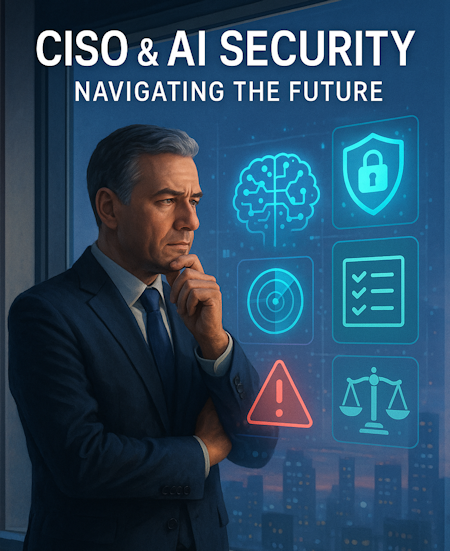
The AI Revolution in Corporate Security
The integration of artificial intelligence into corporate environments represents one of the most significant technological shifts of our time. As organizations race to harness AI's transformative potential, Chief Information Security Officers (CISOs) find themselves at a critical crossroads. According to recent research from TrustCloud, a staggering 88% of CISOs report concerns about deploying AI securely and managing the associated risks. This statistic underscores the complex reality facing security leaders today: balancing the immense benefits of AI adoption against an evolving landscape of security challenges.
The pressure to implement AI solutions has intensified dramatically in recent years. Organizations are eager to leverage AI for competitive advantage, operational efficiency, and innovation. However, this rush toward a new technological paradigm brings with it unprecedented security considerations that extend far beyond traditional cybersecurity frameworks. As AI systems become increasingly embedded in critical business functions, the security implications grow exponentially more complex.
This article explores the multifaceted challenges CISOs face when implementing and securing AI systems in corporate environments. We'll examine the benefits driving AI adoption, the unique security challenges these systems present, and practical strategies for building a robust AI security posture. By understanding both the opportunities and risks, security leaders can develop comprehensive approaches that enable their organizations to harness AI's potential while maintaining appropriate security controls.
The Benefits Driving Corporate AI Adoption
The rapid acceleration of AI adoption across industries is driven by compelling business benefits that extend far beyond simple automation. Understanding these advantages provides essential context for security leaders tasked with enabling safe AI implementation.
Enhanced Decision-Making and Operational Efficiency
AI systems excel at processing vast quantities of data and extracting actionable insights that would be impossible for human analysts to discover manually. This capability transforms decision-making processes across the organization. In cybersecurity specifically, AI-powered systems can analyze network traffic patterns, user behaviors, and potential threats at unprecedented speed and scale. According to PwC's 2025 CISO survey, organizations implementing AI-driven security operations report significant improvements in threat detection speed—with some systems identifying potential breaches in seconds rather than hours or days.
The operational efficiency gains are equally impressive. AI systems can automate routine security tasks, allowing security teams to focus on more complex challenges. This shift represents not just cost savings but a fundamental reallocation of human expertise toward higher-value activities. As one CISO from a Fortune 500 financial institution noted in a recent industry forum, "Our AI implementation has effectively given us back thousands of analyst hours per month that were previously spent on alert triage and false positive investigation."
Proactive Risk Management
Traditional security approaches have often been reactive, responding to threats after they emerge. AI fundamentally changes this paradigm by enabling proactive risk management. Machine learning models can identify subtle patterns indicative of emerging threats before they manifest as full-scale attacks. This predictive capability allows security teams to address vulnerabilities and potential attack vectors before they can be exploited.
The 2025 Cisco Cybersecurity Readiness Index highlights that organizations with mature AI security implementations report a 43% improvement in their ability to predict and prevent security incidents compared to those relying solely on traditional security tools. This proactive stance not only reduces the likelihood of successful attacks but also minimizes the potential impact when breaches do occur.
Scalable Security Operations
As corporate digital footprints expand across cloud environments, remote work infrastructures, and IoT ecosystems, the challenge of maintaining comprehensive security visibility grows exponentially. AI provides the scalability needed to monitor and protect these complex environments effectively.
Security operations that would require massive teams of human analysts can be augmented or partially automated through AI systems that continuously monitor for anomalies across the entire digital estate. This scalability is particularly valuable for organizations experiencing rapid growth or digital transformation, where security resources might otherwise become stretched thin.
The CISO's AI Security Challenge: Navigating Uncharted Waters
Despite the compelling benefits, implementing AI securely presents CISOs with a complex set of challenges that extend beyond traditional security considerations. These challenges require new approaches, frameworks, and expertise.
The Data Security Paradox
AI systems require vast amounts of data for training and operation—creating what might be called the "data security paradox." On one hand, more data generally leads to better AI performance. On the other hand, each additional dataset incorporated into AI training or operations expands the potential attack surface and privacy concerns.
This paradox is particularly acute when AI systems process sensitive information such as customer data, financial records, or intellectual property. According to the Evanta CISO Community Pulse on AI Adoption, 79% of CISOs cite data privacy concerns as a primary obstacle to AI implementation. The challenge extends beyond simple data protection to questions of data governance: What data should AI systems be allowed to access? How should that access be controlled? What monitoring is required to ensure data isn't being misused or exfiltrated?
The "Black Box" Problem
Many advanced AI systems, particularly deep learning models, operate as "black boxes" where the internal decision-making processes are opaque even to their creators. This lack of explainability creates significant challenges for security leaders who need to understand, validate, and trust the systems operating within their environments.
The black box problem has both technical and governance implications. From a technical perspective, it complicates vulnerability assessment and security testing. From a governance standpoint, it raises questions about accountability and compliance. If an AI system makes a decision that results in a security incident, who is responsible? How can organizations demonstrate due diligence when they cannot fully explain how their AI systems function?
The Expanding Attack Surface
AI systems introduce new attack vectors and expand the organization's overall attack surface. The SentinelOne State of AI Security Report identifies 14 distinct AI-specific security risks, including data poisoning, model inversion attacks, adversarial examples, and backdoor attacks. Each of these represents a novel threat vector that traditional security tools and processes may not adequately address.
The challenge is compounded by the rapid evolution of AI technologies and the corresponding security threats. As one CISO from the healthcare sector noted in a recent industry panel, "We're trying to secure systems that are changing faster than our security frameworks can adapt. It's like trying to build guardrails on a road that's constantly being redesigned."
The Skills Gap
Securing AI systems requires specialized expertise that combines traditional cybersecurity knowledge with an understanding of machine learning, data science, and AI-specific vulnerabilities. This expertise is in short supply, creating a significant skills gap for organizations implementing AI.
According to the 2025 Cisco Cybersecurity Readiness Index, 68% of organizations report difficulty finding security professionals with the necessary AI security expertise. This shortage affects everything from initial security architecture design to ongoing monitoring and incident response. CISOs must develop strategies for either building this expertise internally or accessing it through external partnerships.
The Governance Challenge
AI governance represents perhaps the most complex challenge for CISOs. Effective governance must address questions of risk ownership, decision-making authority, ethical considerations, and regulatory compliance. The challenge is particularly acute given the rapidly evolving regulatory landscape surrounding AI.
The European Union's AI Act, China's regulations on algorithmic recommendations, and various U.S. state and federal initiatives create a complex compliance environment that varies by jurisdiction. CISOs must navigate this landscape while also establishing internal governance structures that balance innovation with appropriate risk management.
The Rush to Implement: Balancing Speed and Security
The pressure to rapidly implement AI solutions creates a tension between speed and security that CISOs must carefully manage. This tension is not unique to AI, but it is particularly acute given the technology's transformative potential and the competitive advantages early adopters may gain.
The Business Imperative
Business leaders increasingly view AI as a strategic necessity rather than an optional technology. This perception creates significant pressure to implement AI solutions quickly, sometimes at the expense of thorough security evaluation. According to PwC's 2025 CISO survey, 73% of security leaders report experiencing pressure to accelerate AI deployments despite unresolved security concerns.
This pressure often manifests as "shadow AI"—AI implementations deployed without proper security oversight or governance. The 2025 Cisco Cybersecurity Readiness Index notes that unregulated AI deployments pose significant cybersecurity and data privacy risks, as security teams struggle to monitor and control what they don't know exists within their environments.
The First-Mover Advantage
In many industries, organizations that successfully implement AI early gain significant competitive advantages. This first-mover advantage creates a powerful incentive to accelerate AI deployments, potentially bypassing established security processes in the rush to market.
The challenge for CISOs is to enable this innovation while ensuring appropriate security controls are in place. This requires a shift from security as a gatekeeper to security as an enabler—providing frameworks, tools, and guidance that allow for rapid but secure AI implementation.
The Technical Debt Consideration
Rapid AI implementation often creates technical debt—shortcuts or compromises made to accelerate deployment that must eventually be addressed. This technical debt can have significant security implications, creating vulnerabilities that may not be immediately apparent but emerge over time.
CISOs must consider not just the immediate security implications of AI deployments but also the long-term security posture. This requires developing strategies for systematically addressing technical debt and ensuring that security considerations are integrated throughout the AI lifecycle, from initial design through ongoing operations and eventual decommissioning.
AI Security Use Cases and Threat Scenarios
Understanding specific use cases and corresponding threat scenarios provides valuable context for CISOs developing AI security strategies. These examples illustrate both the potential benefits and the security challenges associated with different AI implementations.
Use Case: AI-Powered Threat Detection
AI systems are increasingly used to enhance security operations, analyzing vast amounts of security data to identify potential threats. These systems can detect subtle patterns indicative of attacks and significantly reduce false positives compared to traditional rule-based approaches.
However, these same systems introduce new security considerations. Adversarial attacks specifically designed to confuse AI-based detection systems represent a growing threat. In these attacks, malicious actors craft inputs specifically designed to cause the AI to misclassify or ignore malicious activity. According to the Trend Micro State of AI Security Report, adversarial attacks against AI security systems increased by 37% in the first half of 2025 compared to the previous year.
Use Case: Generative AI for Business Operations
Generative AI systems like large language models (LLMs) are being rapidly deployed across organizations for everything from content creation to code generation. These systems can dramatically enhance productivity and enable new capabilities, but they also introduce significant security risks.
Prompt injection attacks represent a particularly concerning threat vector. In these attacks, malicious actors craft inputs that cause the AI to ignore its safety constraints or reveal sensitive information. The NIST AI Risk Management Framework's Generative AI Profile, released in July 2024, specifically addresses these risks and provides guidance for mitigating them.
Data leakage represents another significant concern. Generative AI systems may inadvertently incorporate sensitive information from their training data into their outputs, potentially exposing confidential information. This risk is particularly acute when these systems are trained on or have access to proprietary corporate data.
Use Case: AI in Customer Interactions
AI-powered chatbots and virtual assistants are increasingly used for customer service and support. These systems can provide 24/7 assistance, handle routine inquiries, and escalate complex issues to human agents when necessary.
The security implications of these systems are significant, particularly regarding authentication and access control. If compromised, these systems could potentially provide unauthorized access to customer information or be manipulated to deliver misleading information. According to research from PurpleSec, attacks targeting AI customer service systems increased by 45% in 2025, with attackers specifically exploiting weaknesses in authentication mechanisms.
Use Case: AI for Decision Support
Organizations increasingly deploy AI systems to support critical business decisions, from financial forecasting to supply chain optimization. These systems analyze complex datasets to provide insights and recommendations that inform strategic decision-making.
The security implications extend beyond traditional confidentiality concerns to questions of integrity and availability. If these systems are compromised or manipulated, they could lead to flawed decisions with significant business impact. The integrity of the data feeding these systems is particularly critical, as corrupted inputs can lead to corrupted outputs even if the AI system itself remains secure.
Building a Comprehensive AI Security Framework
Addressing the complex security challenges associated with AI requires a comprehensive framework that extends beyond traditional security approaches. The following elements provide a foundation for CISOs developing AI security strategies.
Leveraging Established Frameworks
While AI presents unique security challenges, CISOs need not start from scratch when developing security frameworks. The NIST AI Risk Management Framework (AI RMF), released in January 2023, provides a structured approach to managing AI risks across the entire AI lifecycle. The framework emphasizes four core functions: Govern, Map, Measure, and Manage.
The "Govern" function focuses on establishing organizational structures and processes for AI risk management. This includes defining roles and responsibilities, establishing risk tolerance levels, and developing policies and procedures specific to AI.
The "Map" function involves identifying and documenting AI systems, their components, and associated risks. This comprehensive inventory provides the foundation for effective risk management.
The "Measure" function focuses on assessing and analyzing AI risks, considering factors such as potential impact, likelihood, and vulnerability to various attack vectors.
Finally, the "Manage" function involves implementing controls to address identified risks, monitoring their effectiveness, and continuously improving the organization's AI security posture.
Implementing AI-Specific Security Controls
Beyond leveraging established frameworks, CISOs must implement security controls specifically designed to address AI-related risks. These controls should address the unique vulnerabilities associated with AI systems, including:
Data Protection Controls: Implementing robust data governance practices to protect the data used for AI training and operations. This includes data classification, access controls, encryption, and monitoring for potential data leakage.
Model Security Controls: Protecting AI models from tampering, theft, or manipulation. This includes secure model development practices, version control, integrity verification, and monitoring for potential adversarial attacks.
Input Validation: Implementing robust validation for inputs to AI systems to prevent adversarial examples, prompt injection, and other input-based attacks. This may include filtering, sanitization, and anomaly detection for inputs.
Output Monitoring: Continuously monitoring AI system outputs for signs of compromise, manipulation, or unintended behavior. This includes establishing baseline performance metrics and alerting on significant deviations.
Developing AI Security Talent
Addressing the AI security skills gap requires a strategic approach to talent development. CISOs should consider multiple pathways:
Internal Training: Developing existing security personnel through specialized training in AI security concepts and techniques. This approach leverages institutional knowledge while building new expertise.
Strategic Hiring: Recruiting specialists with backgrounds in both security and AI/machine learning. These hybrid professionals can bridge the gap between traditional security teams and AI development teams.
External Partnerships: Engaging with specialized consultancies, academic institutions, or security vendors with AI expertise. These partnerships can provide access to specialized knowledge while internal capabilities are being developed.
Establishing AI Governance Structures
Effective AI governance requires clear structures and processes for decision-making, risk management, and oversight. Key elements include:
AI Ethics Committees: Cross-functional groups responsible for evaluating the ethical implications of AI implementations and establishing guidelines for responsible use.
Risk Assessment Processes: Structured approaches for evaluating the security, privacy, and compliance risks associated with proposed AI implementations before deployment.
Ongoing Monitoring and Audit: Continuous oversight of AI systems in production, including regular security assessments, performance monitoring, and compliance verification.
Incident Response Planning: Developing specific protocols for responding to AI-related security incidents, including containment strategies, forensic analysis capabilities, and recovery procedures.
The Path Forward: Enabling Secure AI Innovation
As AI continues to transform corporate environments, CISOs face the dual challenge of enabling innovation while ensuring appropriate security controls. The path forward requires a balanced approach that recognizes both the transformative potential of AI and the very real security risks it presents.
Shifting from Gatekeeper to Enabler
Successful AI security requires a shift in the CISO's role from gatekeeper to enabler. Rather than simply blocking or restricting AI implementations, security leaders must provide frameworks, tools, and guidance that enable secure innovation. This shift requires close collaboration with business leaders, data scientists, and AI developers to understand business objectives and develop security approaches that support rather than impede those objectives.
Embracing Adaptive Security
The rapidly evolving nature of AI technologies and threats necessitates an adaptive security approach. Static security controls quickly become obsolete in the face of new AI capabilities and attack vectors. CISOs must develop security architectures and processes that can evolve alongside the technology, continuously incorporating new threat intelligence and security capabilities.
Prioritizing Transparency and Explainability
Addressing the "black box" problem requires prioritizing transparency and explainability in AI implementations. While perfect explainability may not be achievable for all AI systems, organizations should strive for appropriate levels of transparency based on the system's criticality and potential impact. This transparency supports not only security objectives but also broader governance, compliance, and ethical considerations.
Preparing for Regulatory Evolution
The regulatory landscape surrounding AI security continues to evolve rapidly. CISOs must stay informed about emerging regulations and standards while developing compliance strategies that can adapt to new requirements. This preparation includes not only understanding specific regulatory requirements but also establishing the governance structures and documentation practices needed to demonstrate compliance.
Securing the AI-Enabled Future
The integration of AI into corporate environments represents both an unprecedented opportunity and a significant security challenge. CISOs who successfully navigate this landscape will enable their organizations to harness AI's transformative potential while maintaining appropriate security controls.
The journey requires balancing competing priorities: innovation versus security, speed versus thoroughness, automation versus human oversight. There are no simple solutions to these complex challenges, but there are structured approaches that can help organizations manage the risks effectively.
By leveraging established frameworks like the NIST AI RMF, implementing AI-specific security controls, developing specialized talent, and establishing robust governance structures, CISOs can build the foundation for secure AI implementation. The goal is not to eliminate all risks—an impossible task in any complex technological environment—but to understand, manage, and mitigate those risks to acceptable levels.
As we move further into the AI era, the organizations that thrive will be those that view security not as an obstacle to innovation but as an essential enabler—providing the trust and confidence needed for AI to deliver on its transformative promise. For CISOs, this represents not just a technical challenge but a strategic opportunity to shape the future of their organizations in the AI-enabled world.
