Securing Gas Utility Operations: Implementing Zero Trust for Remote Access

The Evolving Threat Landscape for Gas Utilities
The gas utility sector stands at a critical juncture where operational resilience and cybersecurity have become inextricably linked. Recent years have witnessed an alarming surge in sophisticated cyber threats targeting critical infrastructure, with the energy sector experiencing a reported 70% increase in attacks between 2023 and 2024 alone. The Colonial Pipeline incident of 2021 continues to serve as a sobering reminder of the devastating consequences when malicious actors successfully breach operational technology (OT) environments. As remote access capabilities expand to support distributed operations, maintenance activities, and third-party vendor support, gas utilities must implement robust security architectures that protect critical systems without impeding operational efficiency.
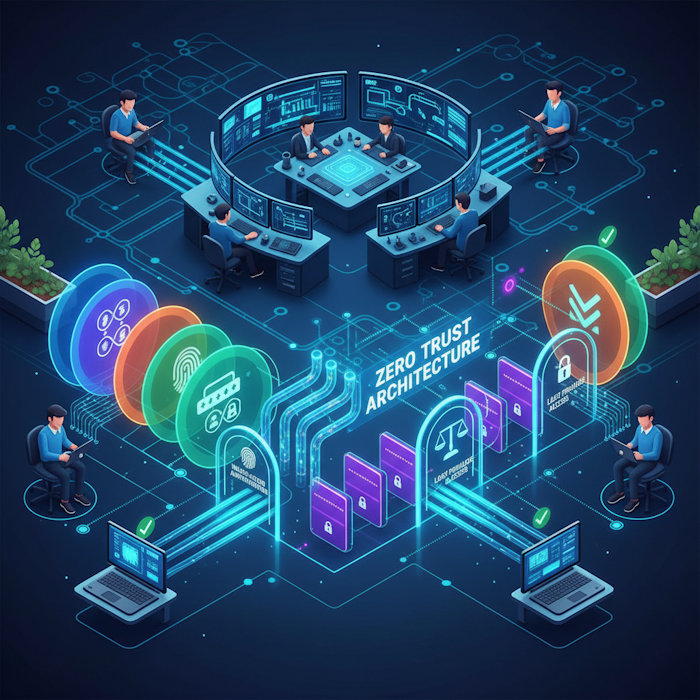
Zero Trust Architecture (ZTA) has emerged as a compelling security framework for gas utilities seeking to secure remote access to their operational technology environments. Unlike traditional perimeter-based security models that operate on the principle of "trust but verify," Zero Trust adopts a "never trust, always verify" approach that fundamentally changes how organizations authenticate, authorize, and monitor access to critical systems. This article explores how gas utilities can implement Zero Trust principles to secure remote access to their operational environments, addressing the unique challenges of OT security while maintaining operational continuity.
Understanding the Unique Security Challenges of Gas Utility OT Environments
Gas utility operational technology environments present distinct security challenges that differentiate them from traditional IT infrastructure. These systems control physical processes that directly impact public safety, environmental protection, and energy reliability. Understanding these unique characteristics is essential for implementing effective Zero Trust strategies:
Legacy Systems and Extended Lifecycles: Many gas utility OT environments incorporate industrial control systems (ICS) with operational lifespans measured in decades rather than years. These systems were often designed without security as a primary consideration and may lack support for modern authentication protocols, encryption standards, or security updates. Implementing Zero Trust principles requires careful consideration of these legacy constraints.
Availability Requirements: Gas utilities operate critical infrastructure where system availability is paramount. Unlike IT environments where brief outages might be tolerable, OT system disruptions can have immediate physical consequences. Security controls must be implemented with extreme caution to avoid operational disruptions, making the "fail closed" security posture common in IT environments potentially dangerous in OT contexts.
Diverse Technology Ecosystem: Gas utility OT environments typically encompass a heterogeneous mix of technologies, including SCADA systems, programmable logic controllers (PLCs), remote terminal units (RTUs), and human-machine interfaces (HMIs) from various vendors and generations. This diversity complicates the implementation of consistent security controls and creates potential security gaps at integration points.
Expanding Attack Surface: The convergence of IT and OT systems, coupled with the growth of Industrial Internet of Things (IIoT) devices and remote access requirements, has dramatically expanded the attack surface of gas utility operations. Remote monitoring, predictive maintenance, and operational analytics create new connectivity points that must be secured against potential compromise.
Regulatory Compliance: Gas utilities operate under stringent regulatory frameworks that mandate specific security controls and reporting requirements. In the United States, this includes TSA Pipeline Security Guidelines, which were strengthened following the Colonial Pipeline incident to require more robust remote access security controls, including multi-factor authentication and continuous monitoring.
Zero Trust Architecture: Core Principles for Gas Utility Applications
Zero Trust Architecture represents a significant departure from traditional security approaches. When applied to gas utility remote access scenarios, several core principles emerge as particularly relevant:
Assume Breach: Zero Trust begins with the assumption that threats may already exist within the network perimeter. This mindset shift is crucial for gas utilities, where sophisticated threat actors may establish persistent access and remain undetected for extended periods while conducting reconnaissance activities.
Verify Explicitly: Every access request must be fully authenticated, authorized, and encrypted regardless of where the request originates. For gas utilities, this means implementing strong identity verification for all users, devices, and applications attempting to access OT systems, whether from corporate networks, field locations, or vendor environments.
Least Privilege Access: Users, devices, and applications should be granted only the minimum permissions necessary to perform their specific functions. In gas utility contexts, this might mean providing maintenance technicians access only to specific equipment during scheduled maintenance windows rather than persistent access to entire control system networks.
Micro-segmentation: Network environments should be divided into secure zones with separate access requirements. For gas utilities, this typically involves creating distinct security zones for corporate IT, industrial DMZ, and core OT systems, with controlled data flows between zones.
Continuous Monitoring and Validation: Security is treated as a dynamic state requiring continuous verification rather than a one-time authentication event. Gas utilities must implement ongoing monitoring of all remote access sessions, with capabilities to detect anomalous behaviors that might indicate compromise.
Policy-Driven Configuration: Security policies should be dynamically updated based on risk assessments. For gas utilities, this means implementing adaptive access controls that consider factors such as user role, device security posture, access location, and current threat intelligence.
Implementing Zero Trust Remote Access for Gas Utilities: A Practical Framework
Transitioning to a Zero Trust model for remote access requires a structured approach that acknowledges the operational constraints of gas utility environments. The following framework provides a practical roadmap for implementation:
Phase 1: Discovery and Assessment
Before implementing Zero Trust controls, gas utilities must develop a comprehensive understanding of their current remote access landscape. This includes:
Asset Inventory: Catalog all OT assets that may require remote access, including their technical specifications, security capabilities, and operational criticality. This inventory should identify legacy systems that may require special consideration due to limited security capabilities.
Access Mapping: Document existing remote access pathways, including corporate VPN connections, vendor access systems, field technician remote tools, and emergency access mechanisms. For each pathway, identify the users, devices, and applications currently utilizing these connections.
Risk Assessment: Evaluate the security risks associated with each remote access pathway, considering factors such as the sensitivity of accessible systems, the potential impact of compromise, and the current security controls in place. This assessment should align with industry frameworks such as NIST Cybersecurity Framework or IEC 62443.
Gap Analysis: Compare current remote access security controls against Zero Trust principles to identify gaps and prioritize remediation efforts. This analysis should consider both technical controls and procedural elements such as access approval workflows.
Phase 2: Identity and Access Management Foundation
Strong identity and access management forms the cornerstone of Zero Trust remote access. Key implementation steps include:
Centralized Identity Management: Implement a centralized identity management system that can support both IT and OT environments. This system should maintain comprehensive user profiles including role assignments, access privileges, and authentication requirements.
Multi-Factor Authentication: Deploy phishing-resistant multi-factor authentication for all remote access to OT environments. For gas utilities, this typically involves combining something the user knows (password), something they have (hardware token or mobile authenticator), and potentially something they are (biometric verification).
Privileged Access Management: Implement specialized controls for privileged accounts that can access critical OT systems. These controls should include just-in-time privilege elevation, session recording, and enhanced authentication requirements.
Device Identity: Establish strong device identity mechanisms for all endpoints that will connect to OT environments. This includes implementing device certificates, maintaining device security posture assessments, and enforcing minimum security requirements before allowing connection.
Third-Party Access Controls: Develop specialized workflows for vendor and contractor access that include enhanced vetting, time-limited access grants, and supervised access sessions for particularly sensitive systems.
Phase 3: Network Segmentation and Access Control
Effective network architecture is essential for implementing Zero Trust principles in gas utility environments:
Industrial DMZ Implementation: Establish a well-defined industrial demilitarized zone (DMZ) that separates corporate IT networks from operational technology environments. This DMZ should host intermediary systems such as jump servers, data historians, and proxy services that facilitate controlled access between zones.
Micro-segmentation: Divide OT networks into functional zones based on operational requirements and security sensitivity. This segmentation should be enforced through a combination of physical network separation, virtual LANs, and next-generation firewalls with deep packet inspection capabilities.
Secure Remote Access Gateways: Deploy purpose-built remote access gateways that support Zero Trust principles, including strong authentication, granular access control, session monitoring, and secure protocol enforcement. These gateways should be positioned within the industrial DMZ rather than directly exposing OT systems.
Software-Defined Perimeter: Consider implementing software-defined perimeter (SDP) technologies that create dynamic, one-to-one network connections between users and the specific resources they are authorized to access, effectively making all other infrastructure invisible to unauthorized users.
East-West Traffic Control: Implement controls that limit lateral movement within OT networks, ensuring that even if a remote access point is compromised, the attacker's ability to move to other systems is constrained.
Phase 4: Continuous Monitoring and Response
Zero Trust requires ongoing validation of security posture and rapid response to potential threats:
Session Monitoring: Implement comprehensive monitoring of all remote access sessions, including full packet capture for critical system access, session recording for privileged operations, and behavioral analytics to identify anomalous activities.
Security Information and Event Management: Deploy SIEM solutions that collect and correlate security events from across the remote access infrastructure, with specialized use cases designed to detect potential compromise of remote access pathways.
Threat Intelligence Integration: Incorporate threat intelligence specific to industrial control systems and energy sector threats into security monitoring processes, enabling more effective detection of sophisticated attacks targeting gas utility operations.
Incident Response Planning: Develop and regularly exercise incident response procedures specifically addressing remote access compromise scenarios. These procedures should include containment strategies that can rapidly isolate affected systems without causing operational disruption.
Continuous Validation: Implement regular security testing of remote access controls, including penetration testing, red team exercises, and tabletop scenarios that validate both technical controls and human response procedures.
Case Study: Implementing Zero Trust Remote Access at a Mid-Size Gas Distribution Utility
A mid-size gas distribution utility serving approximately 500,000 customers across three states recently completed a Zero Trust remote access implementation project. The utility had experienced a significant security incident when an attacker compromised a third-party vendor's VPN credentials and gained access to operational systems, though the attack was detected before any operational impact occurred.
The utility's implementation approach followed a phased methodology:
Initial Assessment: The utility conducted a comprehensive inventory of all remote access pathways, identifying over 30 distinct access mechanisms ranging from corporate VPN connections to vendor-specific remote access tools. This assessment revealed significant security gaps, including shared credentials, persistent access grants, and limited monitoring capabilities.
Architecture Design: Working with security consultants specializing in industrial control systems, the utility designed a new remote access architecture incorporating Zero Trust principles. Key elements included:
- A dedicated industrial DMZ with hardened jump servers for all remote access
- Implementation of a privileged access management solution supporting just-in-time access
- Deployment of multi-factor authentication using hardware security keys for all OT access
- Network segmentation based on operational function and security sensitivity
- Session recording and monitoring for all privileged access sessions
Phased Implementation: Recognizing the operational risks associated with changing remote access methods, the utility implemented changes in phases, beginning with non-critical systems and gradually extending to more sensitive operational environments. Each phase included extensive testing and validation before proceeding.
Operational Integration: The utility developed new operational procedures for remote access, including emergency access protocols that maintained security while ensuring rapid response capabilities during incidents. These procedures were integrated into existing operational workflows to minimize disruption.
Results: Following implementation, the utility reported several significant benefits:
- 85% reduction in standing access privileges to OT systems
- Complete elimination of shared credentials for remote access
- Average time to detect suspicious remote access activities reduced from days to minutes
- Successful containment of two attempted compromises through vendor access pathways
- Improved regulatory compliance posture with TSA Pipeline Security Guidelines
The utility noted that while the initial implementation required significant investment, the operational benefits extended beyond security to include improved system reliability through better change management and reduced troubleshooting time through enhanced visibility.
Challenges and Considerations for Gas Utilities
While Zero Trust offers compelling security benefits, gas utilities must navigate several challenges when implementing this approach for remote access:
Operational Technology Constraints: Many OT systems lack support for modern authentication protocols or encrypted communications. Gas utilities may need to implement compensating controls such as protocol gateways, secure proxies, or encapsulation technologies to extend Zero Trust principles to these systems.
Emergency Access Requirements: Gas utilities must maintain emergency remote access capabilities that can be rapidly activated during incidents while maintaining security. This requires careful design of break-glass procedures that provide necessary access while ensuring appropriate monitoring and post-incident review.
Skills Gap: Implementing and maintaining Zero Trust architectures requires specialized skills at the intersection of cybersecurity and industrial operations. Gas utilities often face challenges in recruiting and retaining personnel with this expertise, necessitating partnerships with specialized service providers or significant investment in training.
Performance Considerations: Security controls must not introduce latency or reliability issues that could impact operational systems. Gas utilities must carefully test all Zero Trust implementations to ensure they meet the stringent performance requirements of real-time control systems.
Cultural Resistance: Moving from a perimeter-based security model to Zero Trust represents a significant cultural shift for many operational technology teams. Successful implementation requires executive sponsorship, clear communication of benefits, and ongoing engagement with operational stakeholders.
Future Trends: The Evolution of Zero Trust for Gas Utilities
As gas utilities continue to mature their Zero Trust implementations, several emerging trends will shape future remote access security:
Identity-Centric Security: The focus of Zero Trust will increasingly shift from network-based controls to identity-centric security models that can more effectively manage access across hybrid environments spanning traditional OT, cloud services, and edge computing.
Artificial Intelligence and Machine Learning: Advanced analytics will play an increasingly important role in Zero Trust implementations, enabling more sophisticated behavioral analysis, anomaly detection, and adaptive access controls based on risk scoring.
OT-Specific Zero Trust Solutions: The market is beginning to deliver Zero Trust solutions specifically designed for operational technology environments, with native support for industrial protocols, integration with existing OT security tools, and deployment models that respect operational constraints.
Supply Chain Security Integration: Zero Trust principles will extend deeper into the supply chain, with gas utilities implementing more rigorous controls on vendor access and requiring evidence of Zero Trust implementation from their technology and service providers.
Regulatory Evolution: Regulatory frameworks governing gas utility security will continue to evolve toward more prescriptive requirements for remote access security, likely incorporating explicit Zero Trust requirements based on frameworks such as NIST SP 800-207.
Building a Secure Foundation for the Future
The implementation of Zero Trust principles for remote access represents a critical evolution in gas utility cybersecurity strategy. As operational technology environments become increasingly connected to support efficiency, sustainability, and grid modernization initiatives, the security of remote access pathways becomes fundamental to operational resilience.
By adopting a structured approach to Zero Trust implementation—beginning with comprehensive discovery, establishing strong identity foundations, implementing appropriate network architecture, and maintaining continuous monitoring—gas utilities can significantly reduce their exposure to cyber threats while enabling the operational flexibility required in modern energy systems.
The journey toward Zero Trust is not without challenges, particularly in environments with legacy systems and stringent operational requirements. However, the growing threat landscape facing critical infrastructure operators makes this transition imperative. Gas utilities that successfully implement Zero Trust for remote access will not only enhance their security posture but also build a foundation for secure digital transformation that can support future operational innovations.
As we look toward a future of increasingly interconnected and intelligent energy systems, Zero Trust principles will serve as a crucial enabler of secure operations, allowing gas utilities to embrace new technologies and operational models while maintaining the safety, reliability, and security that their customers and communities depend upon.
