
Hacking Zero Trust Architecture: Advanced Attack Vectors and Exploitation Techniques

The Illusion of Impenetrability
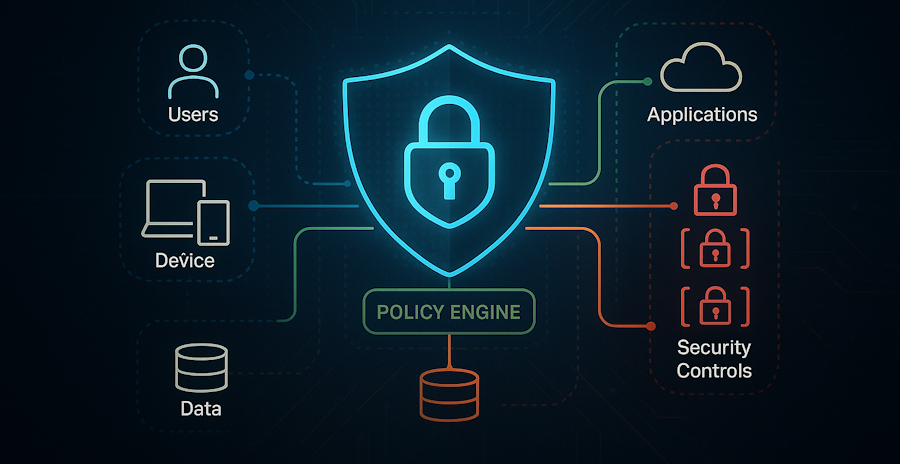
Zero Trust Architecture (ZTA) has emerged as the gold standard for modern cybersecurity frameworks, built on the principle of "never trust, always verify." Organizations worldwide are rapidly adopting this model to address the limitations of traditional perimeter-based security. However, the perception that Zero Trust creates an impenetrable defense is dangerously misleading. Like any security architecture, ZTA has its vulnerabilities and can be compromised through sophisticated attack techniques.
This technical analysis explores the methods attackers use to breach Zero Trust environments, examining attack vectors against key components, real-world exploitation scenarios, and product-specific vulnerabilities. By understanding these attack methodologies, security professionals can better fortify their Zero Trust implementations against evolving threats.
Understanding Zero Trust Attack Surface
Zero Trust Architecture fundamentally shifts security from network perimeters to identity verification, continuous monitoring, and least privilege access. However, this shift creates new attack surfaces centered around identity providers, policy enforcement points, and the verification mechanisms themselves.
The primary attack surface components in a Zero Trust environment include:
- Identity and Access Management (IAM) systems
- Authentication mechanisms (including MFA)
- Policy Decision Points (PDPs) and Policy Enforcement Points (PEPs)
- Continuous monitoring and analytics systems
- Microsegmentation infrastructure
- API gateways and service meshes
- Endpoint security solutions
Each of these components presents unique vulnerabilities that attackers can exploit to compromise the Zero Trust model. Let's examine the specific attack vectors against these critical components.
Attacking Identity Providers: The Keys to the Kingdom
Identity providers form the cornerstone of Zero Trust Architecture, making them prime targets for attackers. A compromised identity provider can grant an attacker legitimate access to multiple resources across the environment.
OAuth and SAML Manipulation Attacks
OAuth 2.0 and SAML are commonly used for federated authentication in Zero Trust environments. Attackers can exploit vulnerabilities in these protocols through:
- Token manipulation: Modifying JWT tokens to escalate privileges or extend token lifetimes
- SAML assertion injection: Injecting malicious SAML assertions to impersonate legitimate users
- Redirect URI manipulation: Hijacking authentication flows to capture tokens
A sophisticated attack might involve intercepting a SAML authentication response, modifying the NameID or role attributes, and replaying the modified assertion to gain elevated privileges. This technique was demonstrated in the SolarWinds breach, where attackers manipulated SAML tokens to access cloud resources while appearing as legitimate users.
MFA Bypass Techniques
Multi-factor authentication is a critical component of Zero Trust, but several techniques can bypass MFA protections:
- Real-time phishing proxies: Tools like Evilginx2 and Modlishka can intercept authentication flows, capturing both passwords and MFA tokens in real-time
- Session hijacking: Stealing authenticated session cookies after MFA completion
- Push notification fatigue: Bombarding users with authentication requests until they approve one out of frustration
- SIM swapping: Taking control of a user's phone number to intercept SMS-based MFA codes
- Social engineering: Convincing help desk personnel to reset MFA settings
In a recent high-profile attack against a major technology company, attackers used a combination of purchased credentials and push notification fatigue to compromise an employee account, despite MFA being enabled. The compromised account had sufficient privileges to access internal development systems, leading to a significant data breach.
Kill Chain Scenarios in Zero Trust Environments
The cyber kill chain in a Zero Trust environment differs significantly from traditional network-based attacks. Let's examine a complete kill chain scenario for compromising a Zero Trust architecture:
Initial Access: Compromising Trusted Identities
- Reconnaissance: Identify employees with privileged access through LinkedIn, social media, and public repositories
- Credential harvesting: Use targeted phishing or purchase credentials from dark web markets
- MFA bypass: Deploy real-time phishing proxies to capture both passwords and MFA tokens
- Initial foothold: Gain authenticated access to the environment with valid credentials and session tokens
Persistence and Privilege Escalation
- Token theft: Extract and store authentication tokens for future use
- Service principal abuse: Create or compromise service principals/API keys with elevated permissions
- Certificate theft: Extract client certificates used for mutual TLS authentication
- Trust relationship exploitation: Identify and exploit trust relationships between identity providers
Lateral Movement in Zero Trust
Lateral movement in Zero Trust environments requires different techniques than traditional network pivoting:
- Session token reuse: Use stolen session tokens to access additional resources
- Service account pivoting: Leverage compromised service accounts to access connected systems
- API chaining: Chain multiple authorized API calls to access restricted resources
- Trust boundary identification: Map and exploit trust boundaries between microsegments
Data Exfiltration Through Legitimate Channels
- Authorized API usage: Exfiltrate data through legitimate API calls that the compromised identity is authorized to make
- Cloud storage manipulation: Use authorized access to cloud storage for data staging and exfiltration
- Encrypted tunneling: Establish encrypted tunnels through authorized communication channels
- DNS exfiltration: Use DNS queries for slow but stealthy data exfiltration
A real-world example of this kill chain was observed in the 2020 SolarWinds supply chain attack, where attackers gained initial access through compromised software, established persistence through manipulated SAML tokens, moved laterally by exploiting trust relationships, and exfiltrated data through legitimate communication channels.
Lateral Movement Risks in Zero Trust Architecture
While Zero Trust aims to prevent lateral movement through microsegmentation and least privilege, several techniques can still enable attackers to move laterally:
Service-to-Service Authentication Exploitation
In modern microservices architectures, services authenticate to each other using service accounts, API keys, or mutual TLS. Attackers can exploit these mechanisms by:
- Stealing service account credentials from compromised applications
- Intercepting and reusing service-to-service authentication tokens
- Exploiting overly permissive service account permissions
- Compromising certificate authorities or key management systems
For example, in a Kubernetes environment with service mesh authentication, an attacker who compromises a single pod can potentially extract service account tokens and certificates, using them to authenticate to other services within the mesh.
Exploiting Trust Relationships Between Microsegments
Zero Trust environments typically implement microsegmentation to isolate workloads, but trust relationships between segments can be exploited:
- Identifying allowed communication paths between segments
- Leveraging dual-homed systems that span multiple segments
- Exploiting policy exceptions created for operational requirements
- Targeting shared services that have access to multiple segments
A common example is exploiting management systems or monitoring tools that have legitimate access across multiple microsegments. By compromising these systems, attackers can pivot between otherwise isolated environments.
Server-Side Request Forgery (SSRF) for Lateral Movement
SSRF vulnerabilities are particularly dangerous in Zero Trust environments because they allow attackers to make requests from trusted internal systems:
- Exploiting web applications to make internal HTTP requests
- Accessing cloud metadata services to retrieve credentials
- Probing internal services not directly accessible to the attacker
- Bypassing IP-based access controls through trusted intermediaries
In a cloud-based Zero Trust environment, an SSRF vulnerability in a web application could allow an attacker to access the cloud provider's metadata service (e.g., AWS IMDSv1), retrieve temporary credentials for the instance's IAM role, and use those credentials to access other resources in the environment.
Product-Specific Vulnerabilities in Zero Trust Implementations
Different Zero Trust products have specific vulnerabilities that attackers can exploit. Let's examine some common product categories and their associated risks:
Identity Provider Vulnerabilities
- Okta: Vulnerabilities in the Okta API can allow attackers to enumerate users, manipulate sessions, or exploit authentication workflows
- Azure AD/Entra ID: Misconfigured conditional access policies, legacy authentication protocols, or service principal vulnerabilities
- Ping Identity: Session management flaws, token handling vulnerabilities, or directory integration weaknesses
In January 2022, the LAPSUS$ group compromised an Okta support engineer's account, gaining access to customer tenants despite Okta's Zero Trust architecture. The attack highlighted how third-party access and support systems can become weak points in otherwise robust identity systems.
Network Microsegmentation Products
- Cisco Secure Workload (Tetration): API vulnerabilities, policy enforcement bypasses, or agent compromise
- VMware NSX: Management plane vulnerabilities, misconfigured distributed firewall rules, or VPN component flaws
- Illumio: Policy engine bypasses, agent tampering, or management console vulnerabilities
A critical vulnerability in VMware NSX (CVE-2021-39144) allowed attackers to execute commands as root on the NSX Manager, potentially compromising the entire microsegmentation infrastructure and allowing unrestricted lateral movement.
Zero Trust Network Access (ZTNA) Solutions
- Zscaler Private Access: Authentication bypasses, client software vulnerabilities, or policy enforcement flaws
- Palo Alto Prisma Access: Management interface vulnerabilities, authentication weaknesses, or client-side exploits
- Cloudflare Access: Token handling issues, identity provider integration flaws, or service worker vulnerabilities
In 2023, researchers discovered a vulnerability in a popular ZTNA client that allowed local privilege escalation, potentially enabling attackers to extract authentication tokens and certificates used for Zero Trust access.
API Gateway and Service Mesh Vulnerabilities
- Istio: Control plane vulnerabilities, certificate management flaws, or policy enforcement bypasses
- Kong: Authentication plugin vulnerabilities, rate limiting bypasses, or administrative API weaknesses
- AWS API Gateway: Misconfigured resource policies, authorization bypasses, or integration vulnerabilities
A vulnerability in Istio's certificate validation (CVE-2020-8595) allowed attackers to bypass mutual TLS authentication under certain conditions, potentially enabling lateral movement between services in a Zero Trust environment.
Case Study: Compromising a Cloud-Native Zero Trust Environment
To illustrate these attack techniques in practice, let's examine a case study of a sophisticated attack against a cloud-native organization implementing Zero Trust principles:
- Initial access: Attackers targeted a developer with spear-phishing, capturing credentials and MFA tokens through a real-time phishing proxy
- Privilege escalation: The compromised developer account had access to the organization's CI/CD pipeline, allowing the attackers to inject malicious code into build processes
- Persistence: Attackers created backdoored container images and service accounts with elevated permissions
- Lateral movement: Using the compromised CI/CD pipeline, attackers deployed backdoored containers across multiple microsegments
- Data exfiltration: Sensitive data was exfiltrated through legitimate API calls to cloud storage services, using the permissions of the compromised service accounts
This attack succeeded despite the organization's Zero Trust architecture because it exploited legitimate access paths and authentication mechanisms rather than attempting to bypass them directly. The attackers "became" trusted entities within the environment, rendering many Zero Trust controls ineffective.
Defending Against Zero Trust Attacks
Understanding these attack vectors is crucial for implementing effective defenses. Organizations should consider the following measures to strengthen their Zero Trust implementations:
- Implement continuous validation beyond initial authentication, including behavioral analysis and anomaly detection
- Deploy deception technology to detect lateral movement attempts
- Implement just-in-time access with short-lived credentials for privileged operations
- Conduct regular red team exercises specifically targeting Zero Trust components
- Implement defense-in-depth with overlapping controls that don't share common failure modes
- Monitor and audit identity provider activities, focusing on credential issuance and policy changes
- Regularly review and test MFA implementation for bypass vulnerabilities
Zero Trust is a Journey, Not a Destination
Zero Trust Architecture significantly raises the bar for attackers, but it is not impenetrable. The attack vectors and techniques discussed in this article demonstrate that sophisticated adversaries can still compromise Zero Trust environments by targeting identity systems, exploiting trust relationships, and leveraging legitimate access paths.
Organizations must recognize that Zero Trust is not a one-time implementation but an ongoing security journey requiring continuous improvement, testing, and adaptation. By understanding the attack techniques used against Zero Trust environments, security teams can better anticipate threats and implement more effective defenses.
The future of Zero Trust security will likely involve greater automation, more sophisticated behavioral analytics, and adaptive policy enforcement that can respond to emerging threats in real-time. As attack techniques evolve, so too must our approach to implementing and maintaining Zero Trust Architecture.
